
For the full article click here (1MB PDF)
Don Burke says you can discourage the bossy, unwanted feral birds and encourage lots of colourful and beautiful native birds with your garden design and choice of plants.
There are good birds and bad birds. Some birds are thugs, others mass murderers. The worst thugs are Indian mynahs. They chase most other birds away and can beat up even large birds like king parrots and white cockatoos. Mynahs are also amongst the smartest animals on Earth. They can learn to talk, fit in almost anywhere and eat almost anything. Some twit introduced them to Australia in 1883 to control insects in sugar cane plantations.
But native birds can be thugs too. Wattlebirds can be very aggressive and territorial. Noisy miners and their close relatives, the bellbirds, can chase almost every other bird species away. Charming as the bellbirds may sound, they create a bleak neighbourhood with few bird species and often sick gum trees.
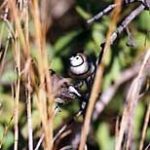
And when grandpa feeds the kookas, is he aware that feeding kookaburras, currawongs, magpies or butcher birds is an environmental disaster? These carnivores prosper with hand-feeding and eat all the small bird species in the area. Blue wrens, silvereyes, finches – all of these charming creatures are devoured by the out-of-control populations of meat-eating birds.
All a bit depressing isn’t it? Well not really. What has emerged in recent years is that we ordinary punters can easily steer the local bird populations. We can balance the bird species and ensure that native species develop a lasting foothold in suburbia and on farms.
Better design
How? Well it is clear now that our choice of garden design, plant selection and which birds we feed has a dramatic effect on the bird species in an area. Indian mynahs, noisy miners, sparrows, turtledoves, feral pigeons and starlings (all introduced pests except the noisy miner) love open, grassy or paved areas dotted with trees. They hate densely planted shrubberies – they want wide open spaces. So, at home, less lawn means fewer pests.
Bird balancing
So, how do you get a practical and pretty garden that is bird-balanced? First of all, minimise paving. Paving is wildlife-unfriendly. And divide the garden into outdoor rooms. This creates usable areas to entertain in, play sport in, grow vegies in, etc. Divide the areas with swirls or beds of shrubs.
You will notice on my bird-friendly garden design on page 38 that there are no large, open areas. The lawn is created in swirls, not big circles or squares. There is still room for kids to play cricket, footy, basketball or to ride bikes. You still have a swimming pool onto which opens a glorious pavilion for outdoor cooking, entertaining or even as a rainy day play area for the kids. You still have a shed, a cubby house or an aviary. You have room for a vegie garden.
Best plants
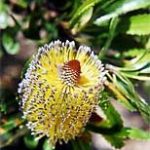
There are no prickly or ugly plants. All of them either flower well or produce excellent foliage. You have the best variety of bottlebrushes, kangaroo paws, grevilleas, banksias, Gymea lilies, grass trees and seeding weeds which all feed wild birds. The Syzygium francisii ‘Little Gem’ is our best privacy plant of all, and it grows well everywhere, except in our coldest areas. It reaches around 2.5m tall and wide, is very dense, looks superb and hardly, if ever, needs pruning. Most lilly pillies grow far too tall and force you to spend your life pruning them. ‘Little Gem’ and the miniature baeckeas are outstanding nesting plants for birds – they are very dense and have lots of forks for nests. Neither are prickly. The Austromyrtus I have suggested for areas down the sides is a lilly pilly relative and very pretty. It loves part shade. Banksias are critical food sources for many nectar-feeding birds as they flower in autumn-winter when little else flowers. If you don’t like any of the plant groups you could grow paperbarks. The ‘Summer’ series of gum trees – ie, ‘Summer Red’, ‘Summer Beauty’, etc – are also excellent backyard trees. These are possibly our best flowering trees and quite small, too (5-7m). The Queensland firewheel tree (Stenocarpus sinuatus) is stunning. All attract and feed birds. Obviously you would substitute some plants in some areas of Australia (no design can suit everywhere). Your local nursery should be easily able to help you.
Soils for natives
If you can, please don’t buy any commercially-available soils, particularly in Sydney and Brisbane, where these soils are problematic when they are sourced from alluvial silts. Your own soil from your own block of land is far better, even if is very clayey.
If you must buy extra soil, get crushed rock. Most crushed rocks are far better for growing native plants than bought soils. Remember that native plants live in broken-down rock out in the bush. They do not live in the alluvial silts that many landscape supply companies sell.
Crushed rock is often sold as road base. Fear not. Sandstone road base is fine for growing native plants, as are most other crushed rocks. Crushed limestone and old concrete are too alkaline, so avoid them. Most river sands are awful horticultural products, so avoid them too.
You can mix crushed rock with your own soil, but I prefer to use it as a 300mm deep layer on top of the soil. Cover it with leaf litter mulch to finish it all off.
No-one can guarantee that you won’t get some pest birds. No-one can guarantee that native birds will definitely come to your garden. But with a design like the one on page 38 you’ll have every chance of fulfilling your dreams.
If you don’t understand the pavilion thing in this garden design just go to the Burke’s Backyard website at www.burkesbackyard.com.au and look up the Backyard Blitz fact sheet in the 2005 makeover archives, and find the ‘Ultimate Outdoor Entertainer’. It has all the details.
And promise me that you will send your results, pictures and number of bird species spotted in to us in due course.
Oh, and an after-thought. I mentioned earlier that it is very naughty to feed kookaburras, magpies, currawongs and butcher birds, but it is fine to feed rainbow lorikeets with a lorikeet mix, and finches with seed.