
Frogs
Temperament: placid
Cost: $80-100 plus
Lifespan: 20 years
Recommended for: kids of all ages
Maintenance: medium
In the past few years wildlife authorities have relaxed regulations to allow certain frogs to be kept as pets in Australia, provided licences or permits are given. Now more people can discover just how appealing frogs are as pets. Two of the most popular and adaptable species are the Green Tree Frog, and the White-Lipped Tree Frog.
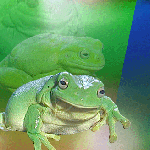
Appearance: Growing to 10cm (4″) in body length, the Green Tree Frog (Litoria caerula) is usually olive to bright green on top, and white underneath. The toe pads are large, round and webbed.
The White-Lipped Tree Frog (Litoria infrafrenata) is said to be one of the world’s biggest tree frogs, usually growing to 10cm, but some individuals have reached 14cm in body length. They are green to brown on top with a clear white line along the bottom lip. It is also white underneath.
Temperament: Our frog-keeper, Margaret Vaux, reckons her frogs respond to their names, and have distinct personalities. She says the Green Tree Frog is the most placid, while the White-Lipped Frog is “jumpier”. Most will become quieter if handled regularly.
Health: It is claimed that some frogs live past 20 years but they are very sensitive to their environment. Diseases can be hard to treat, if identified! Frogs are also easily stressed if handled roughly, and many succumb to outside factors – other pets, small children and their own escape attempts.
It is very important that frogs are handled ONLY after the hands have been washed clean (preferably with rainwater) of dirt and sweat, and are still damp.
Feeding: One of the hardest aspects of frog-keeping is maintaining a fresh, balanced diet. This includes providing insects like crickets, cockroaches, mealworms, and the flies. While some frogs can be tricked by dangling a dead insect on a string, a regime of growing your own insects or sourcing a reliable supplier is vital. Breeders suggest feeding 10-20% of their body size every two to three days. Some frogs will take food from their owners’ hands.
Housing: Frogs can be kept in aquariums, the bigger the better. It is nicest if decorated with small ponds (treated to remove the chlorine), rocks, and plants. An aquarium heater is important in cooler areas to maintain air temperatures around 20°C. Pond edges need to slope so the frogs can climb out. The enclosure needs to be escape-proof, remembering they can climb glass walls! Use fibreglass mesh on top, not wire as this can injure a jumping frog.
The equipment required for housing frogs involves a number of costs. Large aquarium tanks range from $500 – $1000+ and small tanks start from $90+. Internal pumps and filters range from $70+ and external pumps and filters range from $300-$500. Heating cables or pads cost $80+, heat lamps cost $130+ and thermometers range from $40-$50+.
Breeding: Despite most children keeping tadpoles, it’s actually quite difficult to replicate breeding conditions to the point that frogs will reproduce in a home situation. Temperature, humidity and water are among the variables, but your pets won’t know this and may still set up a nightly chorus of croaking!
Legalities: Most authorities Australian states & territories require pet owners buy a licence or permit before getting their frog, and as frogs are protected species, they cannot be taken from the wild. Our story was filmed in South Australia where it is easier to keep some pet frogs as pets.
For more information on permits in Australia visit: https://frogs.org.au/arc/legal.html#:~:text=South%20Australian%20licences%20and%20protection&text=All%20other%20frog%20species%20remain,on%20private%20property%20without%20consent.
Further reading
A Field Guide to Frogs of Australia, by Martyn Robinson, published by Reed New Holland, rrp. $22, available from most larger bookshops.