
Horse: Palomino
Temperament: variable
Maintenance: medium to high
Cost: from$1000
Lifespan: up to 30 years
Recommended for: enthusiasts and diligent novices
History
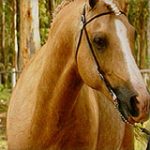
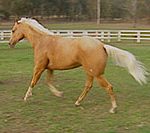
Palomino actually describes a colour rather than a particular breed. The Palomino colour is actually a dilute form of chestnut; it has a distinctive gold coat and a white mane and tail. Any breed of horse which may appear chestnut may also be bred for the Palomino colour.
A Palomino is actually defined as a saddle horse or pony type and therefore may be a Quarter Horse, part-bred Arabian, part Thoroughbred or of pony breeding; as long as it has the required golden coat. The first private palomino registry began in 1932 in the United States and palomino associations are now located throughout the world. The Australian Palomino Horsebreeders Association has been registering breeders and horses since 1948. Palomino horses may actually be registered separately with both the particular breed association and the Palomino Association.
Palomino origins are unclear but golden horses have featured in texts and drawings for hundreds of years across many continents. The word Palomino is Spanish, meaning ‘young pigeon’ and is also a common Spanish surname.
Appearance
In order for a horse to be registered as a Palomino it must first meet specific colour requirements. The ideal coat colour is that of a gold coin, but a variation of three shades lighter or darker is acceptable. The mane and tail must be white or near-white, providing a sharp contrast with the coat. The skin may be either dark or of a golden colour. White is permissable on the face in the form of a blaze, snip or star whilst on the legs white hair must not extend above the knees and hocks. Naturally occurring white is not permitted anywhere else on the body. Ideally, the coat should appear to have a shiny iridescence.
Uses and temperament
Palominos are evident in most equine activities ranging from led to saddle and harness activities. Palominos of Quarter Horse origin are the most commonly seen. Palominos however may also be found in rodeos, dressage, hacking, jumping and trail riding. Temperament will vary depending on the breed and the individual animal.
Health and Lifespan
The great strength of the Palomino is that it is bred for colour rather than specific traits. Cross bred Palominos have genetic input from different breeds, ensuring that the Palomino doesn’t really suffer from any commonly inherited disorders or diseases. However, individual breeds may be predisposed to various health problems. Check with a horse veterinarian about the particular breed you may be interested in. Healthy horses may live up to 25 to 30 years.
Breeding and cost
If a person were to breed four palomino foals from the mating of a Palomino stallion to a Palomino mare, they could expect to produce a likely combination over time of two palominos, one white coloured foal (called cremello) and one chestnut. Cremellos are pure white with pinkish/blue eyes. Although they look similar to an albino, they do differ from the true albino. Due to the nature of the diluting gene, the only way to achieve 100% palomino offspring is to mate a cremello with a chestnut. It is a curious fact that some horse clubs (eg. The Australian Quarter Horse Association) accept palominos for registration, but do not accept cremellos. This policy needs urgent review as it effectively means that the cremellos are virtually worthless, yet they are a valuable breeding asset. The cost of a Palomino will vary greatly according to the breed and the degree of colouring. Don’t expect much change from $1000.00 for a reasonably bred type.
Maintenance and care
Palominos for work or pleasure riding can be cared for like any other horse; regular daily care such as mixing feed, grooming, cleaning out feet and exercising and cleaning bedding if stabled. Palominos for showing require extra care and a more specific diet to keep that golden coat looking its best. It appears that certain diets may affect the golden coat colour, but no scientific tests have been done to confirm this. Some Palomino owners recommend feeding diets rich in carotene. They achieve this by adding mashed pumpkin as a supplement to the main diet.
Cotton rugs whilst paddocked are also recommended to keep the horse clean. All horses also require regular worming and hoof trimming, about every six weeks. Feeding costs will depend on the breed.
Recommended for
Anybody from the enthusiast to the general horse owner can own a Palomino as there are many different breeds of horse suited to all skill levels. However, one must be prepared to commit time to their horse daily and can expect to do so for many years.
More information
We filmed our story in South Australia with Alison Chibnall and other members of the Australian Palomino Horsebreeders Association.
Alison is a member of the South Australian branch and can be contacted on phone (08) 8388 3169.
Victorian enquiries should be directed to the South Australian Branch.
For other state branches of the Australian Palomino Horsebreeders Association, contact;
NSW/ACT
Secretary Margaret Wombey
Phone: (02) 6231 5493
QLD/NT
Secretary Heather Nichols
Phone: (07) 4778 3078
STH QLD
Secretary Yvette Zlies
Phone: (07) 3245 3168
TAS
Secretary Donna Ryder
Phone: (03) 62681 966
WA
Secretary Monique Bray
Phone: (08) 9572 7057