
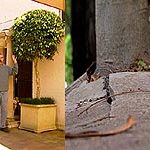

Dangerous Roots
One of the most fashionable plants in Australia at the moment is Ficus benjamina, the weeping fig. Pots of standardised weeping figs clipped and shaped into balls on sticks can often be seen dramatically framing entrances or doorways; left unclipped they make attractive and graceful indoor feature plants. There are many new and improved varieties available, including the lovely ‘Midnight Beauty’, which has a dense growth habit and dark, almost black foliage. Weeping figs are easy to look after, and will tolerate moderately low light levels and some neglect.
Warning
Although weeping figs are very beautiful plants and their popularity is well deserved, it is important to remember that in their natural habitat they are rainforest giants. If you transfer your dainty little weeping fig from a pot to the garden and leave it unpruned it is quite capable of growing more than 15m (50′) tall x 12-15m (40-50′) wide. The root system of a weeping fig is extremely aggressive; it can crack footpaths and driveways and destabilise the foundations of houses.
What to do
We do not recommend planting weeping figs in suburban gardens. If you must plant a weeping fig, keep it at least 8-10m (25-30′) from the house as well as a fair distance from footpaths and driveways. There is a bit of flexibility if the trees are rigidly pruned, thus restricting their root growth and spread, however, we recommend alternatives such as lillypillies.
Potted outdoor figs can send strong roots down through the bottoms of their containers, and crack any paving or driveways nearby. It’s a good idea to stand the pots on bricks or pot feet to keep them raised off the ground. From time to time, tilt them over to reveal any roots that may be escaping underneath and to clean out accumulated leaf litter. The roots should be cut off with a sharp spade.
If you plant any variety of fig tree in the garden as a hedge and then sell your house, make sure to tell the new owners how important it is to keep the hedge pruned!