
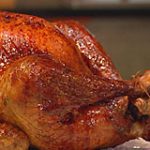
Cooking a Turkey
Geoff Jansz demonstrated how to stuff, roast and glaze the Christmas turkey.
Stuffing
This stuffing is suitable for any type of poultry, not just turkey.
(Note: if you prefer to use packet stuffing, beef it up with extra breadcrumbs and some herbs.)
1 loaf 3-day-old bread
2 tablespoons butter
2 onions, finely diced
2 tablespoons fresh sage leaves
1/2 cup walnuts, chopped
1/2 cup dried apricots, chopped
1/2 cup prunes, chopped (seeds removed)
freshly ground black pepper, to taste
1. Remove the crusts from the bread and break the loaf up into eighths. Place the bread in a blender and process until breadcrumbs form. (Note: stale bread is best for making stuffing, as it absorbs the flavours of the bird and creates a better final texture.)
2. Melt the butter in a large, non-stick pan over a gentle heat. Add the onions and cook for about 5 minutes, until golden.
3. Add the sage, walnuts, apricots and prunes and cook for a further 2 minutes. Stir through the breadcrumbs and check the consistency of the stuffing by pressing some of the mixture onto a tablespoon. If it holds together well it is moist enough. If it looks wet and doughy, add more breadcrumbs to the mix. If it crumbles and falls off the spoon, add more melted butter.
4. Add freshly ground pepper to taste and mix thoroughly.
Roast turkey
Preheat the oven to 175°C for gas ovens and 180°C for electric ovens. Note: a 4kg turkey will cook in an oven at 175°C in 2 hours. If your turkey is larger, lower the temperature slightly and increase the cooking time; if your turkey is smaller, increase the temperature and reduce the cooking time.
1. Wash the turkey and dry both inside and outside the bird thoroughly with paper towels. Remove any innards that may have been re-packaged into the bird.
2. Stuff the turkey by taking handfuls of stuffing mixture and placing it inside the cavity of the bird. (Tip: squeeze the stuffing just tightly enough so that it holds together – squeezing it too tightly makes it turn lumpy and it may not cook properly.)
3. Fold the wings under the bird then tie up the legs with butcher’s twine (do not use wool or string as these might burn). Brush the turkey with a little olive oil and sprinkle some salt over it.
4. Place the turkey on a rack over a tray of water in the oven. (Tip: use some of the water from the tray when making your gravy.)
5. Cook according to the instructions for the size of your turkey – a turkey timer is sometimes inserted in birds weighing under 4.4kg, and pops up when the turkey is done. You can also check how the bird is cooking by cutting at the thickest point of its body, between the thigh and the breast. If the juice on the knife is clear, the turkey is cooked. Alternatively use a meat thermometer and insert it into the thigh of the turkey; when it reads 85°C it’s done.
6. If the turkey is browning unevenly, you may need to turn it. Do this while basting it in the glaze (see below for the turkey glaze recipe).
7. Cut off the twine when the turkey is cooked, don’t try to untie it.
8. To serve, remove the thighs, legs and wings. Separate the leg from the thigh then carve the breast.
Turkey glaze
This syrupy baste gives the turkey a golden glow.
1 cup sugar
splash of water
1/2 cup sherry
1/4 cup butter
1. Put the sugar and a little water into a frypan. Cook until it starts to brown or caramelise. Switch off the heat and carefully pour in the sherry. (Tip: have the pan lid close by and cover the pan quickly, so that the glaze does not splatter and burn you.)
2. Add the butter and swirl through until it melts.
3. Use a pastry brush to apply the glaze after the turkey has been cooking for 1 hour. Repeat every 15 minutes until the bird has finished cooking. (Tip: you can cook the turkey the day before and let it cool. When cool, carve it to serve and place on a tray. On the day all you need to do is slowly heat the meat up in the oven while you’re roasting the vegies and making the gravy.)
Further information