
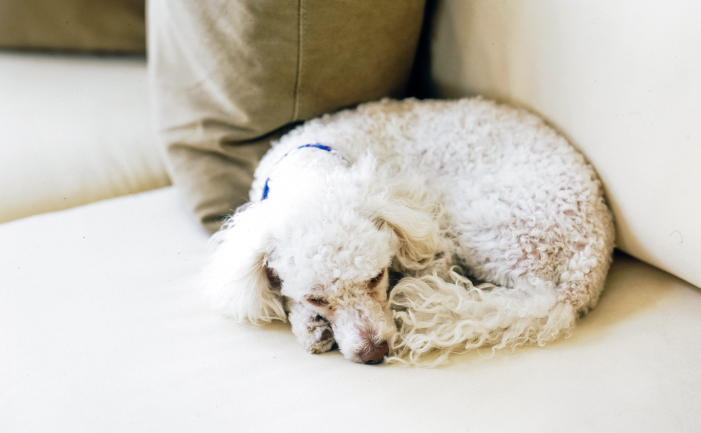
Poodles
Breed: Poodle
Temperament: intelligent but can be neurotic
Lifespan: up to 15 years
Maintenance: high
Recommended for: families, singles, elderly
Although some may still regard the Poodle as the epitome of canine extravagance and a symbol of the well heeled, this breed has in fact crept into the hearts and minds of many owners who would argue that this could not no be any further from the truth.
History
The history of this breed suggests that the Poodle is perhaps more that just a fashion accessory. Its origins are believed to lie in Germany, where woolly coated, poodle-types were commonly used as water retrievers; working dogs used by hunters to retrieve shot birds. These original dogs somewhat resembled the Standard Poodle, the largest of the three types available today.
The neighbouring French eventually adopted these working dogs, where the love affair with the social elite began. Over time, the process of miniaturisation took place and the Standard Poodle was crossed with various smaller breeds and further refined to produce the two other sizes which we now see today, the Miniature Poodle and Toy Poodle.
Appearance
The toy and miniature types are by far the most popular of the three types today. Toys stand under 28cm (11″), similar in height to a Maltese; whilst the Miniature may be about 10cm (4″) taller, like a Fox Terrier. The Standard Poodle is a medium to large-sized dog, standing well over its smaller cousins.
It is the Poodle’s coat that sets it apart from many other breeds. Thick, curly and dense, it has a woolly appearance rather than furry and doesn’t shed. If left un-clipped, which is not recommended, this woolly coat would normally conceal the dog’s fine-boned form. Slender built with sharp, well defined features, the poodle’s frame used to be shown off with those elaborate clipping styles which once associated the breed with the well-to-do. These clips are now really only commonly seen in the show ring. Most owners simply prefer to have their poodle uniformly clipped all over, producing the appearance much the same as a young lamb.
Poodles are available in solid colours ranging through white, cream, silver, brown and black.
Temperament and training
Despite their playful and, some believe, dimwitted demeanour, poodles are in fact regarded as one of the most intelligent of dog breeds. These animals love human companionship and will often form close bonds with one member of the family, usually the provider. This can produce a loyal and easily trained companion, equally ideal for those living alone or with a family. However, an intelligent dog is an easily spoilt dog, and a spoilt poodle can be a force to be reckoned with. Known to become neurotic if over-pampered, spoilt poodles can be intensely demanding, nervous and unpredictable around strangers or other family members seen to be below it in its own social order. Breeders often say though, that a neurotic owner most likely owns a neurotic poodle. The breed should simply not be over-pampered and must be treated with an evenhanded approach, maintaining a reasonable level of discipline and common sense.
Of the three varieties, this is perhaps more so with the Toy, which due to its small stature, is prone to developing a nervous and unpredictable manner if handled roughly or antagonised, a problem most often seen when in a family with small or boisterous children. Breeders generally agree that the Standard is the most stable of the three, though requires the most exercise. The Miniature is most common among families. Obedience training, at least to a level so that the dog understands essential basic commands, is recommended.
Health and lifespan
The Poodle is a fairly healthy breed but may still suffer from some various conditions which are common with many breeds of similar size. The process of miniaturization can lead to problems of overcrowding of the teeth in the toy variety, whilst the Toy is also susceptible to degeneration of the ball of the hip joint and Miniatures may suffer from slipping kneecaps. These two conditions can be corrected surgically and the likelihood of their incidence can be determined by a veterinarian. Eye disorders, such as Progressive Retinal Atrophy (PRA) are known to occur amongst the breed, but can, and should, be tested-for by breeders before selling pups.
The deep chest of the Standard Poodle may predispose it to bloat – a gastrointestinal condition associated with overfeeding or feeding at inappropriate times. New owners should consult with breeders to discuss dietary requirements. Hip Dysplasia, a chronic condition affecting the hip joints, is also evident in the Standard variety. However, all of these above conditions can be tested for by breeders. A responsible breeder would not use affected animals, so be satisfied you are purchasing from a reputable breeder.
Any long-eared breed with a large covering of hair is also prone to a build-up of wax and grime in the ear canal, which may result in infections if not cleaned regularly. Healthy, well-maintained poodles will live a long life, around 15 years.
Maintenance and cost
If you’re after a low maintenance dog which requires little grooming, don’t choose a poodle. The coat doesn’t shed and grows continually, much the same as a sheep, and requires clipping every five to six weeks, without fail. If allowed to grow long, the coat will matt, eventually pulling on the skin and hurting the dog. Those elaborate and sometimes bizarre clips are not essential, and a simple ‘lamb clip’ is all that is required. Owners can learn to clip their dogs, however a professional clipper is recommended for the first year, until the dog becomes accustomed to the practice. Ears should be regularly cleaned and plucked and the coat brushed to remove any foreign matter. Once weekly bathing is recommended.
One of the more expensive breeds, the cost will start from around $1800 and size doesn’t necessarily dictate price, some Toys can fetch over $4000. Clipping will cost around $60 to $150, depending on the size of the animal and the establishment. This regular cost should be considered before purchasing the dog. Enquire amongst local grooming establishments and other local poodles owners to see what these extras will cost in your area.
Ideal owner
The two smaller varieties are popular indoor dogs with the added benefit of having a non-shedding coat, an advantage for some, though not all, allergy suffers. The coat doesn’t really have a particularly strong doggy odour either. The Poodle’s habit of bonding closely with their owner really does suit them to single owners and the elderly, as long as the owner is prepared and able to maintain the dog’s coat. And remember this can be a long lived breed, which requires regular, daily exercise, so consider what your lifestyle may entail in 10 to 15 years time. Will a poodle still be practical then?
Desexed males are perhaps best suited to families with children. Females are most prone to a single attachment to one member of the family, allowing possible undesirable behaviour towards other family members, especially kids. A desexed male will not necessarily attach himself solely to one member of the family, however the one golden rule to remember is that over-pampering will still spoil any dog. So treat your poodle right and you’ll have an adoring, intelligent and stable companion for many years to come.
Contacts
To find up-to-date contacts for breeders, contact the following organisations.
Dogs NSW
www.dogsnsw.org.au
Email: [email protected]
Phone: (NSW only) (02) 9834 3022
Dogs Victoria
http://www.vca.org.au
Email: [email protected]
Phone: (03) 9788 2500
Dogs ACT
https://dogsact.org.au
Email: [email protected]
Phone: (02) 6241 4404 –
Dogs West
https://www.dogswest.com/dogswest/Home.htm
Email: [email protected]
Phone: (08) 9455 1188
Dogs SA
http://www.dogssa.com.au
Phone: (08) 8349 4797
Canine Control Council of Queensland
https://dogsqueensland.org.au
Email: [email protected]
Phone: (07) 3252 2661
Tasmanian Canine Association
http://www.tasdogs.com
Email: [email protected]
Phone: (03) 6272 9443
Dogs NT
https://www.dogsnt.com.au
Email: [email protected]
Phone: (08) 8984 3570