
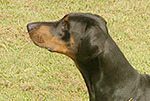
Breed: Dobermann
Temperament: boisterous, intelligent, faithful
Maintenance: high
Lifespan: 8-10 years
Recommended for: active experienced dog owners
Dumpage rate: medium
Background
The Dobermann has had a reputation for being an aggressive and vicious dog. The breed has also been renowned for several genetic problems including hip dysplasia, Von Willebrands factor, wobblers syndrome, as well as eye and temperament problems. When the Rottweiler became the fashionable “tough” dog less and less people were interested in the Dobermann breed. But things are changing, the Dobermann Club of Queensland has taken a similar course of action to that of the German Shepherd Club of NSW. They have spent the last 5-7 years changing the club to improve the breed and its profile in the community. They have now made veterinarian and temperament reports compulsory for breeding dogs in their club. Any dogs with certain clearly detectable problems are not permitted to register for breeding. They are also helping people to determine if they are “right” to own this breed.
History
The Dobermann was first developed by German Louis Dobermann in the 1880s. He was a dog catcher, night watchmen and city rates collector. He noticed the need for a good fearless watch dog and started selectively breeding with local dogs. No-one is sure exactly what Louis used but there is mention of Great Dane, Manchester Terrier, Weimaraner and the old German Shepherd (not the one we know now). The breed spread throughout Eastern Europe making its way to the UK after WWII. The first dogs were brought to Australia in 1952. Since the Dobermann has appeared as we see it now, they have been feared and respected for their protective and potentially aggressive behaviour. Although this reputation may be misleading to the true character of the dog, it has no doubt aided the breed in its duties as a protector. Not too many people would enter a yard displaying a “Dobermann lives here” sign.
Appearance
True to the breed’s heritage the dogs are medium sized sleek coated animals. They are muscular and elegant with a well set body and are capable of great speed. Dobermann height ranges from 60 to 70cm (24-28″) and the dogs come in four colours, black, brown, blue and fawn all with rust tan markings. Although the fawn and blue are not widely kept due to inherited skin problems.
Temperament
Dobermanns are loyal and trustworthy and a great family dog if brought up in that environment. They can be trained to be protective and tough towards strangers whilst remaining a playmate for the family. Dobermanns can also be boisterous and vocal at times. Some dogs are nervous or aggressive in normal situations and these dogs can present a problem if placed in a stressful situation. Dogs of this character are easily identified by the mandatory temperament test, and not recommended for breeding in the Queensland Club.
Health and lifespan
One of the most negative characteristics of the Dobermann is their short life span rarely living past 10 years. This can sometimes make them unsuitable for those who find losing a pet extremely traumatic.
There are several genetic problems currently being worked out of the breed by the Doberman Club of Qld. These problems can be clearly identified at an early age through the clubs mandatory health testing requirements and detection means that dogs are eliminated from breeding programs before they are bred.
1. Von Willebrands factor – a form of haemophilia that can be detected by a DNA test
2. Hip Dysplasia – this can lay dormant in some dogs and X-rays must be presented and cleared
3. Eye problems – Ectopic and Entopic problems must not be detected by a animal opthamologist
Although the National Dobermann Council has standard temperament tests, the Qld club makes these tests compulsory for their members. The tests are conducted by the club to weed out shy and nervous dogs who do not respond well to unfamiliar stimuli. Any aggression, shyness, or “stand offishness” is seen as incorrect behaviour for a companion breed. Dogs who fail the temperament tests may be deemed unsuitable for breeding.
The following Dobermann problems are not clearly detectable until symptoms present themselves, at which stage the dog is struck from the breeding register.
4. “Wobblers” – a skeletal problem in which vertebrae fuse, the symptoms mimic hip dysplasia
5. Hypothyroidism – thinning of the hair along the flanks and sluggish personality
6. Diluted Alopecia – a recessive gene occurs in colour variations of blue and fawn and causes hair to fall out permanently
7. Heart Problems – recommended to have regularly heart checks and ultrasounds and an ECG once every two years.
If X-rays are taken at any time it is recommended that the neck, elbows and hips are also X-rayed to send to Roger Lavelle of the University of Melbourne for use in his study of bone and joints.
Grooming
The Dobermann possesses a single coat that needs only occasional rub downs with a damp cloth and bathing when required. They do tend to form callouses on their elbows and hocks and these can be kept soft with the application of baby oil each day.
Diet and exercise
A well balanced diet is all a Dobermann needs. The Club advises that Dobermanns are not fed cooked bones of any sort. A raw mutton flap is the best thing, but balance this with grains and vegetables. The Dobermann requires space and exercise, at least 30 minutes a day and regular jogging or running exercise. Large amounts of yard activity can substitute for outside exercise. Do not exercise immediately after feeding the dog.
Training
Training is very important for a Dobermann and it is highly recommended to start when the dogs are puppies. The Queensland Club offers specialised obedience training to Dobermanns of all ages. If the dog is going to be mixing with strangers on a regular basis it is recommended that the dogs are introduced to other people and animals from as early an age as possible.
Other
Dobermanns do not do well if chained up, so a secure yard is needed.
Recommended for
Although this breed is low maintenance in terms of grooming they are not low maintenance in regards to lifestyle. They are very active dogs that need attention and interaction with owners as well as exercise. These dogs are smart and need to be occupied. The Dobermann Club of Qld receives a call a week from owners who have not made the right decisions and need to give up their dogs. Only people who like active boisterous dogs should consider Dobermans. They are not suitable for first time dog owners and small children may not mix well with adult dogs.
Further information
We filmed with members of the Dobermann Club of Queensland. Other clubs around Australia may not enforce the same admission criteria we featured in the story. It is recommended that all puppy buyers should ask to see copies of test results conducted by breeders on the parents of the puppy they are looking to purchase.
National contacts
To find up-to-date contacts for breeders, contact the following organisations.
The Australian National Kennel Council (ANKC)
www.ankc.org.au
Dogs NSW
http://www.dogsnsw.org.au/breeders-directory
Email: [email protected]
Phone: 1300 728 022 (NSW only) or (02) 9834 3022
Fax: (02) 9834 3872
Dogs Victoria
http://www.vca.org.au
Email: [email protected]
Phone: (03) 9788 2500
Fax: (03) 9788 2599
Dogs ACT
http://www.actca.asn.au
Email: [email protected]
Phone: (02) 6241 4404 – Fax: (02) 6241 1129.
Dogs West
http://www.cawa.asn.au
Email: [email protected]
Phone: (08) 9455 1188
Fax: (08) 9455 1190
Dogs SA
http://dogssa.com.au
Phone: (08) 8349 4797
Canine Control Council of Queensland
http://www.cccq.org.au
Email: [email protected]
Phone: (07) 3252 2661
Fax: (07) 3252 3864
Tasmanian Canine Association
http://www.tasdogs.com
Email: [email protected]
Phone: (03) 6272 9443
Fax: (03) 6273 0844
Dogs NT
http://www.territorydogworld.com
Email: [email protected]
Phone: (08) 8984 3570
Fax: (08) 8984 3409
The Australian National Kennel Council (ANKC)
www.ankc.org.au
Dogs NSW
http://www.dogsnsw.org.au/breeders-directory
Email: [email protected]
Phone: 1300 728 022 (NSW only) or (02) 9834 3022
Fax: (02) 9834 3872
Dogs Victoria
http://www.vca.org.au
Email: [email protected]
Phone: (03) 9788 2500
Fax: (03) 9788 2599
Dogs ACT
http://www.actca.asn.au
Email: [email protected]
Phone: (02) 6241 4404 – Fax: (02) 6241 1129.
Dogs West
http://www.cawa.asn.au
Email: [email protected]
Phone: (08) 9455 1188
Fax: (08) 9455 1190
Dogs SA
http://dogssa.com.au
Phone: (08) 8349 4797
Canine Control Council of Queensland
http://www.cccq.org.au
Email: [email protected]
Phone: (07) 3252 2661
Fax: (07) 3252 3864
Tasmanian Canine Association
http://www.tasdogs.com
Email: [email protected]
Phone: (03) 6272 9443
Fax: (03) 6273 0844
Dogs NT
http://www.territorydogworld.com
Email: [email protected]
Phone: (08) 8984 3570
Fax: (08) 8984 3409