
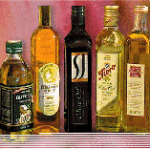
Oils ain’t Oils?
There are a lot of different cooking oils now available including safflower, sunflower, corn or maize, grapeseed, sesame, peanut, macadamia, mustard, canola, lots of different olive oils and even avocado, apricot, hazelnut and other nut oils. Rosemary Stanton gives her recommendations on which oils are best. The message with oil is don’t use too much and make extra virgin olive oil your first choice.
Nutritional value
All cooking oils have the same high calorie level but there are some oils that have the right kinds of fat as well as a wide range of antioxidants. Antioxidants offer protection against heart disease and may be valuable to reduce the risk of many types of cancer. Canola oil (made from rapeseedss, which is a type of mustard seed) contains a small amount of omega 3 fatty acids*. Light olive oil does not mean that it is low in fat, it means that it is light in flavour and colour. Cold-pressed oils are taken from the fruit, seed or nut by pressing and no chemical solvent is used. Cold-pressed oils may cost a bit more but they have a much better flavour and a greater range of antioxidants.
- Omega 3 fats are valuable in the diet as they can reduce blood clotting and inflammatory reactions. Omega 3 fats may be useful in controlling or treating some aspects of coronary heart disease, asthma and certain types of arthritis.
Best oils
Rosemary Stanton recommends making Extra Virgin olive oil your first choice for several reasons.
Note: Extra Virgin means the oil is from the first pressing of the olive.
Extra Virgin olive oil is cold-pressed and has a strong flavour so you won’t need to use a lot of it on your food. No chemical solvents have been used in its production and it has the right kind of monounsaturated fat as well as having dozens of antioxidants. Other oils that have the right kind of monounsaturated fats include; macadamia oil, peanut oil, mustard oil and canola oil. Canola oil has an excellent balance of fats but unfortunately many brands have almost no flavour (extracted using a chemical solvent). Cold-pressed canola is a bright yellow product with a mustard-like flavour.
Cooking tips
It makes sense to use an oil with a strong flavour so that you can satisfy your tastebuds with a small amount. Just a teaspoon of olive or sesame oil adds flavour to a meal.
Oils should not be kept for more than a year, because unlike wine, they do not get better with age. Purchase small quantities at a time.
If frying with a polyunsaturated oil like corn, safflower, sunflower or grapeseed oil throw out the leftovers. Reheating these oils can form some nasty chemical compounds.
It is better to fry with peanut oil or olive oil. Olive oil can be reused many times (up to as many as 40 times) so although it’s a little more expensive it turns out cheaper.
When deep frying with oil make sure the oil is really hot before you add the food. Check the heat of the oil by dropping in a cube of bread. If it browns quickly it means the oil is hot enough.
Note: When food is deep fried in olive oil it actually absorbs less fat than if it is shallow fried in an ordinary frying pan.
Adding some oil to your salad not only makes it taste better but it also helps your body absorb some of the vitamins out of the vegetables.
Further information
For more of Rosemary Stanton’s advice on food and nutrition consult:
Good fats: bad fats by Rosemary Stanton (Allen & Unwin, 1997, rrp $6.95);
Rosemary Stanton’s Complete Book of Food and Nutrition (Simon & Schuster, revised edition, 1995, rrp $29.95); or
Eating for Peak Performance by Rosemary Stanton, (Allen & Unwin, second edition, 1994, rrp $14.95); or
Find out about Fibre, by Rosemary Stanton, (Allen & Unwin, 1998, rrp $6.95).