
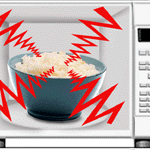
Microwave Safety
Most Australian homes have a microwave oven. They are very handy for cooking vegetables as they retain more vitamins than almost any other cooking method. But most people use their microwaves more for reheating foods.
Fast food containers such as those that hold a takeaway Thai or Chinese meal can leak chemicals into food if they are used for reheating more than once, or if they overheat even during the first use.
The takeaway containers are made of PVC (polyvinylchloride) which contains virtually no water and so in theory is fairly inert in the microwave because microwaves heat by exciting water molecules in foods or containers. But, when the food gets really hot, and in particular the temperature of any fat in the food can get quite high, the PVC will soften and could leach some of its chemicals into the food.
Safe alternatives
It is advisable to use these containers only once for reheating or preferably tip the food into a glass or ceramic dish to heat it. Cover the dish with a glass lid or some microwave-safe plastic wrap. Most of the plastic wraps are made from microwave-safe polyethylene now. You can also buy some foods such as pasta in special containers made of cardboard or aluminium that can go into the microwave. But be sure to read the instructions. Although safe, these types of containers can become brittle and collapse if you re-use them. So they also should only be used once.
Reheating tips
If you have leftovers it makes sense to reheat them in the microwave because it’s fast, efficient and it retains the nutrients. But use a glass or ceramic dish or choose something marked microwave-safe. If you’re reheating takeaway foods in PVC containers don’t let them get too hot and never use the container more than once.
Further Information
For more of Rosemary Stanton’s advice on food and nutrition consult:
Rosemary Stanton’s Complete Book of Food & Nutrition (Simon & Schuster, revised edition 1995, rrp $29.95)
Eating for Peak Performance (Allen & Unwin, second edition, 1994, rrp $14.95)