
Ginkgo biloba
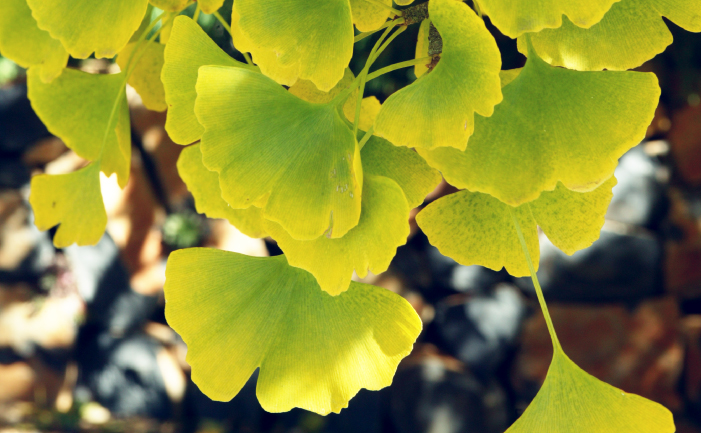
Ginkgos were widespread at the time when dinosaurs roamed the earth, around 125-220 million years ago. Today Ginkgo biloba is known as ‘a living fossil’, because it is the only surviving representative of a group of plants which was once common all over the world. It is believed that this tree is native to China, and that it may be extinct in the wild. Possibly it has only survived because for thousands of years monks planted it around temples in China and Japan.
Plant details
Common name: Ginkgo, maidenhair tree
Botanic name: Ginkgo biloba
The genus name Ginkgo is derived from the Chinese yin-kuo, meaning ‘silver fruit’. The species name biloba refers to the two-lobed leaves. The common name, maidenhair tree, refers also to the leaves, which resemble those of the maidenhair fern (Adiantum spp.).
Description
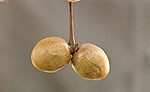
A long-lived, deciduous tree to 25m (75′) tall. The light green leaves are fan shaped and two-lobed, turning golden yellow in autumn. There are separate male and female trees. Greenish catkins occur on the male tree, and the female bears paired fruit on stalks. When ripe the fruit is pale yellow, and consists of a seed surrounded by a foul smelling fleshy layer. Old trees sometimes produce downward growing protuberances or aerial roots from the trunks and lower branches, known as chi-chi. These can reach the ground and take root.
Cultivars available in Australia include:
‘Autumn Gold’ – a male clone with an upright, symmetrical form
‘Fastigiata’ – slender, erect form
‘Pendula’ – long weeping branches
‘Princeton Sentry’ – an upright growing male tree.
‘Saratoga’ – pyramidal male tree with a strong central leader
‘Variegata’ – leaves green and yellow
Best climate
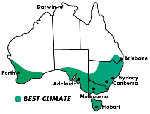
Sydney to Perth and areas south.
Best specimens
Australia: an 18m (60′) specimen in Geelong Botanic Gardens with aerial roots (chi-chi). This tree was grown from a seed planted in 1859. A male and female ginkgo frame the entrance to the old Geology building at Melbourne University in Parkville, Victoria.
England: A 200-year-old male specimen at Kew with chi-chi on the trunk.
China: the ‘King of Trees’ at the Tanzhe Si, south-west of Beijing, is said to be 1,000 years old. Many ginkgos in Japan and Korea are also centuries old.
Uses
Beautiful specimen tree for parks and large gardens. Spectacular clear yellow autumn foliage. The fruit is edible. In Asia the smelly flesh is removed and the seed is boiled or roasted before eating. The seeds are available in Australia in some Asian food stores. Bonsai. Medicinal use, both in Asia and the west. Ginkgo is said to help a range of ailments including high blood pressure, poor circulation, memory loss and even Alzheimer’s disease.
Good points
Clear yellow foliage in autumn Resistant to pests Pollution tolerant Tolerates most soil types Casts light shade
Downside
Butyric acid is present in the flesh of fruit produced by the female trees. The fruit has been described as smelling like rotten meat or rancid butter. For this reason male trees are preferred for ornamental use, although if you plant a female tree it will not flower and produce fruit for at least 20 years.
Cultivation
Plant in full sun and protect from strong winds. Ginkgos prefer deep, fertile soils rich in organic matter, but will survive in poorer soils. Young trees need deep, regular watering until established.
Getting started
Ginkgos may be hard to find. They are available at some nurseries and cost around $60-$70 for advanced 35 litre pots (smaller and also more advanced sizes are also available). Nurseries would not normally stock the cultivars, but can order them in for you (check ‘The Aussie Plant Finder’ to see what’s available – book details below).
Books
‘The Aussie Plant Finder’ by Margaret Hibbert. Published by Florilegium, ISBN 1876314044, rrp $20.
‘The Garden Plants of China’ by Peter Valder. Published by Florilegium, 1999, ISBN 1876314028, rrp $88.
Both books are available in bookshops or contact the publishers, Florilegium on (02) 9555 8589.