
Don Burke says the secret to growing great natives is to use crushed rock instead of soil. Here’s how it’s done.
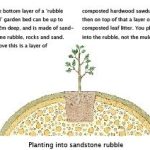
Planting natives into rock rubble works because it duplicates the natural, wild conditions where most of these plants evolved. Refer to the diagram (at top of page) to see how it’s done.
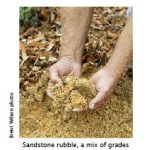
At the bottom of the bed you have sandstone rubble, piled anything up to 1-2m high. This layer is made up of largish rocks varying in size, up to 60mm wide, plus lots of other, smaller rocks, along with the sand left over from quarrying the sandstone. This mix provides perfect drainage plus good anchorage for the roots. This is topped with a layer (anything up to 100mm) of composted hardwood sawdust, then another layer of composted leaf litter mulch. You plant the roots into the sandstone rubble, not into the mulch.
We all know that raised garden beds solve soil drainage problems. Well, sandstone rubble is the same idea, just a bit taller! It’s an excellent, very free-draining medium for growing natives in.
Easy feeding
Don’t make the mistake of thinking natives don’t need feeding. They do. Just make sure it’s the right type of low-phosphorus food that should be labelled on the packet as being ‘suitable for natives’. Slow-release fertilisers specially formulated for natives are ideal, and very easy to apply. I use Debco Green Jacket Formula 5 (for natives), but other brands such as Scott’s Osmocote for natives work just as well.
Alternatives to sandstone
My garden, which uses sandstone rubble, is in the general Sydney area, but elsewhere in Australia sandstone rubble might not be available. However, there should be a suitable rubble alternative in your area.
One exception to this would be the commonly available limestone that you find around Perth – that wouldn’t be suitable for natives. However, in Perth the local sandy soil itself is great for natives. In other areas, talk to local landscape suppliers about the options. In Melbourne recently, for example, I saw natives being grown very well in a coarse blue metal mix. And in Canberra the people from Stonehenge in Pialligo – phone (02) 6248 9063 – have developed a rubble mix of their own that works very well. In Brisbane, crushed rock roadbase is used as the ‘soil’ in one of the best native gardens in the country.
If you talk to a landscaper who says stone rubble won’t work in your garden, he’s a dinosaur. Go and find one who is part of the 21st century.