
Snake Bites
Every year in Australia between 500 to 3000 people are bitten by snakes. A very common myth about snakes is that they are extremely aggressive, and they’ll do just about anything to bite and kill you. This is false. Most snakes will do their utmost to avoid confrontation and they often give warnings before they strike, including flattening of the neck muscles, making several mock thrusts and hissing. In 80% of cases when bites occur, it’s usually because the snake has been surprised or cornered and the person is trying to catch or kill it.
Deaths from snake bite
From available information collected in the 1980s and early 90s, it was reported that there were two to three deaths from snake bite per year in Australia. In the 90s studies suggested that it was three to four. Current data shows that between spring 1997 and autumn 1998 there were at least six deaths. Between spring 1998 and autumn 1999 there have been at least four deaths. It’s thought that the reason for the increase could be that snakes (like the brown snake) are adapting to urban environments.
How dangerous are our snakes?
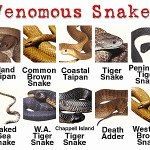
The Western Taipan has the most toxic venom of all snakes, but the dominant species in urban areas across mainland Australia and the one responsible for most of the fatalities is the brown snake. A brown snake bite is not usually painful, there may not be fang marks and sometimes people don’t even realise they’ve been bitten. Tiger snakes are also very dangerous, with fangs that can actually bite through boots. However they are not as common as the brown snake. Red bellied black snakes can also inflict serious bites. They are cannibals and have been known to eat the more dangerous tiger and brown snakes, so they can be a useful snake to have around. Keep in mind that not all snakes are dangerous, but, if bitten, hospital attention should be obtained.
|
Mark Richmond’s tips if you see a snake in the house leave the snake alone
|
|
First aid for snake bites Do: reassure the victim Don’t: apply a tourniquet or constrictive bandage Being bitten by a snake is a terrifying experience, and people are shocked and afraid they will die in seconds. Death within minutes can occur, but it is rare. Following a bite from a brown snake, major collapse can occur within half an hour if no first aid has been given. Therefore correct use of first aid is critical. |
|
Contact information: The Australian Reptile Park, Somersby, NSW. Phone: (02) 4340 1022. For information about helping an injured animal, or becoming involved with wildlife rescue contact the service listed for your state. NSW: Wildlife and Information Rescue Service (WIRES), phone: (02) 9975 1633 VIC:The Wildlife Care Network, phone: 0500 540 000 SA : Fauna Rescue, phone: (08) 8289 0896 QLD: Orphan Native Re-Release Program (ONARR) phone: (07) 3375 4620, Inala Community Conservation Association (ICCA), phone: (07) 3203 5169 WA: Conservation and Land Management, phone: (08) 9334 0251, Fauna Rehabilitation Foundation, phone, (08) 9249 3434 NT: Wildlife Rescue, phone: (08) 8999 4536, Darwin and Darwin Rural Snake Callout, phone: 015 610 039 TAS: Wildlife Section, Tasmania Department of Parks, Wildlife and Heritage, phone: (03) 6233 6556 ACT: ACT Wildlife Foundation, phone: (02) 6296 3114 |