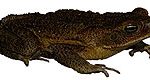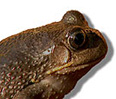
Cane toads (Bufo marinus) are natives of South and Central America. They were introduced into Australia in 1935 to help control the beetles which were decimating our sugarcane crops. Cane toads were useless in controlling the cane beetles but they have become a serious threat to native wildlife, invading wetland habitats and competing with native frogs. They are voracious eaters and will eat anything they can fit in their mouths, including frogs, lizards, snakes and small marsupials. The toxic toads are also a threat to any animals that try to eat them, including domestic pets. A dog can die in just 15 minutes after eating a cane toad.
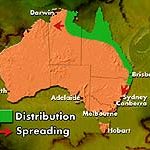
Cane toads have adapted particularly well to the Australian environment. They are spreading west towards Kakadu National Park and south into New South Wales at the rate of 30km a year. According to the CSIRO, cane toads occur at a density in Australia 10 times higher than the density in their native Venezuela. In the past two months, toads have been discovered in suburbs across Sydney where they have never been found before, and there is concern that permanent colonies will soon become established. It is thought that the toads are inadvertently being transported south in consignments of building materials and landscaping supplies.
What to do if you find a cane toad
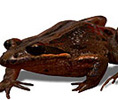
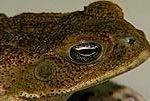
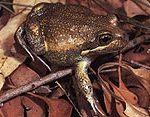
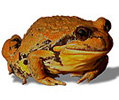
Don’t kill a native frog by mistake. Arthur White, from the Frog & Tadpole Study Group of NSW, warns that it is easy to mistake harmless native frogs for the cane toad. Cane toads have a flattish head, horizontal pupils, large poisonous shoulder glands and brown, blotched skin. They are superficially similar to some native frogs, including the Striped Marsh Frog, the Giant Burrowing Frog and the Eastern Banjo Frog. Cane toads can grow to the size of a dinner plate, while native frogs generally grow no bigger than a human fist. If you suspect you have a cane toad in the garden, don’t kill it. Catch it, put it in a container with some air vents and some damp newspaper or towelling, and contact a local National Parks and Wildlife Service office, or the Frog & Tadpole Study Group on 0419 249 728. (Warning: the toad’s poison can be squirted up to 2 metres (6′) so if you must handle a cane toad, make sure you’re wearing gloves and have full eye protection.)
Further reading
In May 1999, the Burke’s Backyard magazine featured an article on cane toads. Back issues of the magazine are available for $4.60 each. Make cheques payable to ACP Direct and send to Burke’s Backyard, Reply Paid 3508, Sydney, NSW 2001 (postage free in Australia).