

Silkworms
Years ago every backyard had a Hills Hoist and a mulberry tree, and most children kept silkworms. These days, according to silkworm breeder (or sericulturist) Bridget Mahoney, silk farming is a lost art. Bridget’s passion for silkworms began almost thirty years ago when her daughters brought a few worms home from school in a shoebox; since then she has raised hundreds of thousands of caterpillars. Bridget says that when she dies she’s coming back as a silkworm. “They eat for forty days, have sex for three days straight and then sleep for ten days. What a great life.”
From moth to cloth
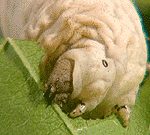
The silkworm is one stage in the development of Bombyx mori, the silk moth. After hatching from their eggs the worms grow to seventy times their original size and shed their skin four times. The tiny creatures have huge appetites. Bridget says that silkworms are more demanding than babies, and during peak feeding times she has to replenish their supply of mulberry leaves four times during the night. When the silkworm matures it spins a soft, creamy white cocoon made from one continuous thread of fluid silk which hardens on contact with air.
Bridget immerses the cocoons in hot water and soap and stirs them around. She then finds a loose end and unravels the thread. Forty good quality cocoons make a fine unbroken thread of silk about a mile long. Bridget then spins the silk in her weaving room and makes fabrics. Over the years she has made clothes for the whole family just using silk produced in her own home. It takes about 800 cocoons to make three silk scarves, and one year’s crop of silkworms makes about three skirt lengths of material.
Silkworm by-products
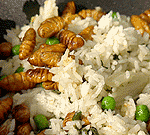
Only 30% of Bridget’s efforts produce silk. The other 70% is in the form of by-products that are used around the house and garden. The pupae are high in protein and essential oils. They can be eaten, and have a fishy taste. After each harvest Bridget is also left with pellets of concentrated fertiliser which she uses on the garden.
Further reading
If you’re interested in the worldwide practice of eating insects and spiders, you’ll find Man Eating Bugs fascinating. It’s by Peter Menzel and Faith D’Alluisio and is published by Ten Speed (1998). Cost: $34.95. ISBN 1580080227.