Don loves peeping over fences and looking into neighbouring gardens. In fact, there is no better way to find out which plants grow best in your area. If the owner of the garden comes out, take the opportunity to ask for information about any plants you are interested in growing. You’ll find most gardeners will be happy to give you a few tips, and even some cuttings.
Hydrangea display
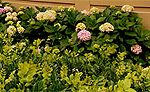
In our segment Don was admiring a row of pink-flowering hydrangeas planted along the semi-shaded side of a building. Hydrangeas (Hydrangea macrophylla) grow best in semi-shade, but they will actually tolerate almost full sun as long as they receive plenty of water, particularly in the warmer months.
Give hydrangeas growing in the ground a deep soaking when they look dry or are wilting. Plants in pots need daily watering during hot weather, and it’s a good idea to have a saucer containing water under the pot.
Changing the flower colour
Hydrangeas are amazingly versatile in that you can actually alter the flower colours to suit your needs. The flower colour in most forms relates to the acidity or alkalinity of the soil. In acid soil (pH 5 or less) hydrangeas are usually always blue. As the soil pH climbs towards the neutral and alkaline end of the scale (pH 7 or more) hydrangeas turn mauve, pink and red. A blueing tonic (containing aluminium and iron) will turn pink or mauve hydrangeas blue. It should be applied once a month in March and April and again in August, September and October, following the directions on the pack. A cup of lime (calcium carbonate) added to the soil in spring will cause blue or mauve hydrangeas to turn pink. White flowering hydrangeas will remain white regardless of soil pH.