
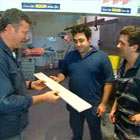
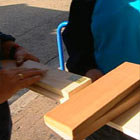
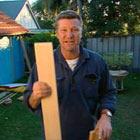
Balsa is soft, so it must be softwood, right? Not so, according to builder, Scott Cam. In our segment Scottie debunked that common furphy, along with several other timber-related myths.
Myth: Timber is classified by its hardness
Fact: The classification of timber is based on the species it comes from, rather than its relative hardness or density. Hardwoods include exotic deciduous species (such as ash, mahogany, oak, walnut and balsa) and Australian native evergreen species (such as jarrah, silky oak, brushbox, iron bark and spotted gum). Softwoods come from coniferous species, such as true cedar, fir, pine and spruce.
Myth: Balsa is softwood
Fact: Balsa is a hardwood used for making model aeroplanes, toys rafts, packing material, floats and insulation. It is pale yellow/whitish in colour, lightweight, very porous and very strong.
Myth: Oregon is good for outside building projects
Fact: Oregon, or Douglas Fir, is a softwood native to North America. Oregon from old growth forests is strong and very dense, and has long been popular for structural framing, joinery and boat building. However, nearly half of our Oregon supplies come from regrowth forests in New Zealand. Because the trees are cut when still young, the growth rings are widely spaced. The timber varies considerably in density and strength and moisture can penetrate easily. Therefore plantation Oregon is not considered suitable for exterior use.