
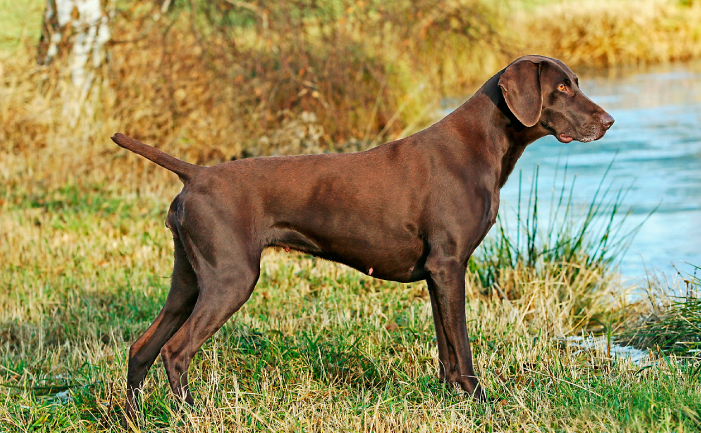
German Shorthaired Pointer
Breed: German Shorthaired Pointer
Temperament: active, friendly, intelligent
Lifespan: 10 – 12 years
Maintenance: low
Recommended for: active owners
History
German Shorthaired Pointers were developed in Germany as a multi-purpose gun dog, to replace the need for both a pointer and a retriever. Pointer refers to the stance a dog takes when it finds game and then strikes a rigid pose to indicate to its handler that there is game ahead.
Appearance
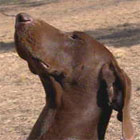
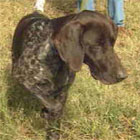
The German Shorthaired Pointer (GSP) is a medium sized dog, with a rather noble, square outline. It has a short, smooth coat in four variations; solid liver, liver with white markings, black and white markings and solid black. Adults are around 53 to 63.5cm tall and weigh around 20 to 31kg. Females being the lower end of the scale. Traditionally the tail has been docked. But docking tails of show dogs is now banned throughout Australia. Tails are still occasionally docked if it can be established that the dog is a working animal and it is in its best interests to have the tail removed.
Temperament
An energetic, even-tempered and protective breed. Ever the vigilant watch dog, the German Shorthaired Pointer will alert owners of a stranger’s approach but should never be aggressive. It is tolerant of other dogs and affectionate towards its human family. Although intelligent, the breed is late to mature. It is important that the dogs be obedience trained whilst young and given plenty of daily exercise both mental and physical.
Health and lifespan
The selective breeding for a good working dog has meant an overall soundness of the breed. There is a very low incidence of hip dysplasia, a condition not uncommon to dogs of this size. 10 to 12 years average lifespan.
Feeding and cost
A German Shorthaired Pointer will cost from around $650.00. These are hearty eaters. Breeders recommend a diet of dry food, fresh meat and brisket bones. Overfeeding will quickly lead to obesity. Feeding costs about $20 per week.
Grooming
A low maintenance breed, these dogs require only a wipe over with a hand mitt once a week to remove loose hairs and a bath when warranted. Ears should be checked and wiped clean at least once a week. Even though they have a single, fine coat, they will still moult a fair bit of hair, which will be evident on furnishings if the dog is allowed indoors.
Ideal owner
A very active breed, requiring a similarly-minded family, especially suited to families with energetic, older children who can include the dog in their games. These Pointers needs an absolute minimum of one hour’s walk each day. Two walks daily is preferred. They excel at agility training and field trials.
National contacts
To find up-to-date contacts for breeders, contact the following organisations.
The Australian National Kennel Council (ANKC)
www.ankc.org.au
Dogs NSW
http://www.dogsnsw.org.au/breeders-directory
Email: [email protected]
Phone: 1300 728 022 (NSW only) or (02) 9834 3022
Fax: (02) 9834 3872
Dogs Victoria
http://www.vca.org.au
Email: [email protected]
Phone: (03) 9788 2500
Fax: (03) 9788 2599
Dogs ACT
http://www.actca.asn.au
Email: [email protected]
Phone: (02) 6241 4404 – Fax: (02) 6241 1129.
Dogs West
http://www.cawa.asn.au
Email: [email protected]
Phone: (08) 9455 1188
Fax: (08) 9455 1190
Dogs SA
http://dogssa.com.au
Phone: (08) 8349 4797
Canine Control Council of Queensland
http://www.cccq.org.au
Email: [email protected]
Phone: (07) 3252 2661
Fax: (07) 3252 3864
Tasmanian Canine Association
http://www.tasdogs.com
Email: [email protected]
Phone: (03) 6272 9443
Fax: (03) 6273 0844
Dogs NT
http://www.territorydogworld.com
Email: [email protected]
Phone: (08) 8984 3570
Fax: (08) 8984 3409
The Australian National Kennel Council (ANKC)
www.ankc.org.au
Dogs NSW
http://www.dogsnsw.org.au/breeders-directory
Email: [email protected]
Phone: 1300 728 022 (NSW only) or (02) 9834 3022
Fax: (02) 9834 3872
Dogs Victoria
http://www.vca.org.au
Email: [email protected]
Phone: (03) 9788 2500
Fax: (03) 9788 2599
Dogs ACT
http://www.actca.asn.au
Email: [email protected]
Phone: (02) 6241 4404 – Fax: (02) 6241 1129.
Dogs West
http://www.cawa.asn.au
Email: [email protected]
Phone: (08) 9455 1188
Fax: (08) 9455 1190
Dogs SA
http://dogssa.com.au
Phone: (08) 8349 4797
Canine Control Council of Queensland
http://www.cccq.org.au
Email: [email protected]
Phone: (07) 3252 2661
Fax: (07) 3252 3864
Tasmanian Canine Association
http://www.tasdogs.com
Email: [email protected]
Phone: (03) 6272 9443
Fax: (03) 6273 0844
Dogs NT
http://www.territorydogworld.com
Email: [email protected]
Phone: (08) 8984 3570
Fax: (08) 8984 3409