
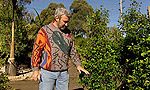
Lilly pillies are tremendously popular in Australian gardens, particularly for hedging and topiary. In fact, these Australian natives are often planted as hedges instead of box. However, there is one thing you should be aware of before you put in a lilly pilly. Many varieties are subject to attack by a tiny insect called a psyllid (Trioza egeniae). The psyllids suck sap from the new leaves, causing ugly oval lumps on the upper surface and corresponding depressions on the lower surface.
What to do
As lilly pillies are used as ornamental foliage plants a psyllid attack can ruin that wonderful leafy effect you were trying to achieve! For this reason ‘Burke’s Backyard’ recommends that you don’t plant the affected species and varieties. These include Syzygium australe and some of its cultivars (‘Blaze’ and ‘Lillyput’ are particularly susceptible although ‘Tiny Trev’ appears to be resistant), Syzygium paniculatum cultivars and Waterhousea species. Search out lilly pilly species that are not attacked by the pest. Syzygium luehmannii (and the dwarf variety Syzygium ‘Royal Flame’) and the closely related Acmena smithii ( particularly the small-leafed lilly pilly Acmena smithii var minor) do not appear to be attacked by the psyllid. Stressed plants are more prone to insect attack, so if you already have problems with psyllids on your lillypillies try giving the plants some TLC. Water them regularly especially in dry times. Fertilise annually in spring with a slow release fertiliser for native plants. As the pest is inside the leaves a systemic chemical such as Rogor could be used when plants are experiencing flushes of new growth. However, the use of chemicals is problematic because by the time the damage is noticed it may be too late to spray. Also chemical control is not an option if you want to attract birds to your garden. Note: plants in nurseries may not show signs of pysllid damage as they are usually sprayed regularly as a protective measure.