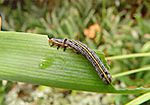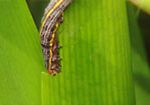
The lily caterpillar seems to have increased in numbers and horticultural importance along with the increased popularity of mass-planted crinum or spider lilies (Crinum pedunculatum) and clivias (Clivia miniata). Don looked at a mass planting of clivias that had been attacked by this caterpillar. Many of the plants were dead, and many others were seriously disfigured.
Pest details Common name: lily caterpillar Botanic name: Spodoptera picta (as a member of the family Noctuidae, it is related to cut worms).
Description:
The lily caterpillar is yellow, grey and black striped with black dots like eyes on the head and base of the body. It is about 5cm long when full-grown. The yellow stripe is more predominant on mature caterpillars. The adult is a small cream and red moth.
Damage/feeding pattern:
The caterpillar is less active in colder months, and more active when it’s hot, wet or humid. It pupates in leaf litter, then moves onto the plant to begin feeding. The larvae hide during the day then come out to feed at night. They chew the leaf surfaces, and also damage the leaf sheath at the base of the plant. Left unchecked the lily caterpillar causes horrific damage, and often kills plants.
Plants affected: crinums, clivia, amaryllis
Control:
The best time to treat or find the pest is first thing in the morning, as it feeds at night and hides by day. Look on both sides of the leaf, and down into the base of the plant. There are no chemicals registered specifically to control the lily caterpillar. However, products registered for the treatment of moth or butterfly caterpillars can be used, particularly the following which are readily available at nurseries and some hardware stores. Dipel (a biological control). This can be applied when the pest is first seen, but it needs to be repeat sprayed frequently to be effective and may leave a residue. Baythroid Garden Insecticide. Fast acting, knock down effect. Available in a ready to use aerosol can. Folimat. Fast acting with some systemic effect. Apply according to the instructions on the container.
If you would prefer not to use chemicals, the caterpillars can be removed physically and squashed (wear gloves if you’re squeamish). It is also a good idea to remove any badly damaged plants.
(Note: damaged leaves may also be further attacked by fungus which will cause leaves to brown and die back. To control this, remove damaged leaves and spray over plants with a fungicide such as Phosacid or Mancozeb Plus.)