
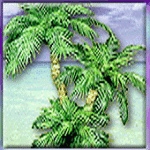
To many people a garden is an oasis, a place where they can escape the stress of busy lives, and just relax. If there’s one plant in particular which evokes memories of holidays, tropical beaches, and gives that calm, peaceful, rainforest sort of feel to the garden, it would have to be the palm. You can instantly create that effect by buying a mature palm, digging a hole and just dropping it in, but as Don demonstrates, it’s really easy to grow your own palms from seed, and it’s also a lot of fun. First though, let’s consider another interesting aspect of palms.
Palm products
As well as being used for housing construction, furniture making and weaving, palms feed millions of people in the world every day, in fact an amazing range of edible products are derived from palms. It’s easy to think of dozens of foodstuffs made from the humble coconut (Cocos nucifera), but perhaps the great crop that’s been neglected in Australia comes from the date palm (Phoenix dactylifera), and dates really are one of the world’s most beautiful fruits.
Propagating your palms
- Wait until the seed ripens (that’s when the outer seed coat colours, and the seed starts to fall on the ground).
- Next, clean off any thick flesh. If the fruits have fibrous pulp which is hard to remove, put them in a plastic bag with a tablespoon of sugar, and the pulp will fall away easily after a few weeks fermentation.
- Sow the seed in any good friable potting mix – Don used 50% moist peat and 50% perlite.
- Water the pot, and then enclose it in a plastic bag (an opaque bag is good because it cuts the light level down) and place in a shady, warm position.
- Germination rates vary depending on the species, for example Kentia palms can take up to 18 months, while golden cane and parlour palms take 1-2 warmer months to come up.
- Once the seeds shoot, you can thin them out and plant them in small 75-100mm (3-4″) pots.
- Keep them in a semi-shaded position, then after a few weeks start feeding with a slow release or soluble fertilizer.
Further reading
If you like to find all about the different types of palms refer to The Palm Identifier, by Martin Gibbons. ISBN 0-73180-083-4. Simon & Schuster, rrp $13.00.