
Tully River Gorge
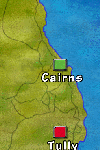
The Tully River Gorge is a World Heritage area situated about 160km south of Cairns in far north Queensland. The headwaters of the river begin on the Atherton Tablelands and the deep gorge has been carved out by the river. The gorge has been carved through an ancient basalt lava flow. The area has spectacular views, waterfalls, rapids and also contains many rare and threatened plants and animal species. The region is one of the wettest parts of Australia with an annual rainfall of 4050mm (162 “).
What to see
The Tully River Gorge rainforest is about 250km south of the Daintree but has similar plants and wildlife. There is an array of rainforest plants and animals in the Tully River Gorge region including:
Fan Palm (Licuala ramsayi) – The fan palm has unusual orbital, windmill like leaves and will grow to 10m (30′). It is endemic to lowland coastal areas of north-eastern Queensland. Further south the bangalow palm (Archontonphoenix cunninghamiana) replaces the role of the fan palm in the rainforest.
Pandanus – The interestingly shaped pandanus are found right across the tropics in northern Australia and even into the Northern Territory.
Cordyline (Cordyline stricta) – The cordyline with its interesting foliage and colourful berries is found on the floor of the rainforest. These plants will grow in gardens in southern Australia in shady areas.
Byfield fern (Bowenia spectabilis) – Although called a fern, the byfield fern is not a true fern at all but belongs to the cycad family. It looks stunning on the floor of the rainforest and is used in floral arrangements for its interesting foliage.
Queensland maple (Flindersia brayleyana) – The Australian native tree is found in Queensland and the timber from the Queensland maple is used in skirting boards and window frames in homes all around Australia. There is less timber available now that the area has been declared a World Heritage area and so substitutes for the timber will need to be found in the future.
Scrub python – Pythons are placid snakes found in the rainforest, feeding on mice, rats and other small rainforest animals.
Scrub turkey – In the rainforest the scrub or brush turkey is quite tame. They use their large feet to dig up mounds of compost where they lay their eggs and the compost controls the temperature of the eggs until the babies are hatched.
What to do
Whitewater rafting is a popular activity on the Tully River with two commercial rafting companies operating. There is also a State Forest Park that caters for camping and picnicking.
Further information
The Tully River Gorge region is about 160km south of Cairns. To visit the Tully River Gorge area Burke’s Backyard drove south from Cairns along the Bruce Highway through Innisfail to Tully. It’s about a 90 minute drive.
For further information contact the Tully Information Centre, Bruce Highway, PO Box 738, Tully, QLD, 4854. Phone: (07) 4068 2288. Fax: (07) 4068 2858.
Open: Monday to Friday 8.30am-4pm; Saturday to Sunday 10am-2pm.