
The Grampians – Qantas Amazing Australia
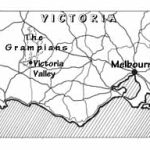
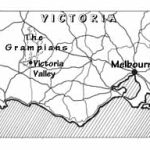
The Grampians National Park is situated in Central Western Victoria, 260km from Melbourne, and is one of the largest national parks in Victoria covering 167,000 hectares (412,661 acres). The national park is named after the mountain range known as The Grampians. This range marks one end of the Great Dividing Range, the other end of which is found near Cooktown in far north Queensland.
Throughout spring there is a colourful display of wildflowers complemented by the spectacular scenery of rugged sandstone peaks and valleys.
Wildflowers
The following wildflowers were shown on ‘Burke’s Backyard’ and can be seen in flower in The Grampians area in October.
Grampians rock rose or bauera (Bauera sessiliflora) – A pretty plant with dainty pink flowers which is found in the cool, shaded glades of The Grampians. It is commonly known as Grampians dog rose, although it is not a rose. The plant’s genus name, Bauera, commemorates Ferdinand Bauer, a 19th century botanic artist and explorer. Its species name, sessiliflora, simply means that the flowers just sit on the stem.
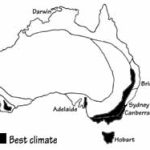
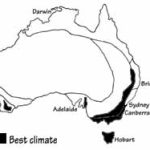
Climate map – Bauera sessiliflora
Comment: Along with the closely related plant Bauera rubioides these native plants, although extremely pretty, can be very difficult to grow in a garden situation. In the wild the plant grows in a slightly shaded area in a soak, just above a little natural watercourse. In the garden it would need to be positioned in a wettish area, perhaps near a fishpond or a watercourse, in a slightly shaded spot for success.
Blue tinsel lily (Calectasia intermedia) – Despite a difference in size, this unusual lily-like plant with its bright blue flowers is related to the Australian native grass tree or black boy (Xanthorrhoea spp.). It has a blue star-shaped flower in spring and is native to the Grampians. It grows as a small shrub (around 60cm or 2′ high). A similar plant, C. cyanea, which flowers in winter, is found in Western Australia.
Comment: This is not a plant that is common in gardens and has proved difficult to propagate. It requires well-drained soil and partial shade.
Phebalium (Phebalium bilobum) – Phebaliums are shrubs with heads of fluffy flowers in spring. Flower colour ranges from white, through yellow to pink. This species, which is native to parts of Victoria and Tasmania, has white flowers and can reach 2m (6′) high and wide.
Comment: This species grows well in the wild but is not often seen in gardens although it will grow into a shapely shrub. It needs good drainage, some shade and to be well mulched to keep the root zone cool. It can be grown from cutting.
Heath plants (Epacris impressa) – These come in colours ranging from pink through to white. The blooms are small, single fuchsia-like flowers which sometimes give this plant the common name of native fuchsia it is also known as the common heath. This species is the floral emblem of Victoria.
Comment: It is a native plant that is often seen in gardens. It can be grown in gardens or in pots in sun or partial shade.
Hibbertias, in particular the bundled guinea-flower (Hibbertia prostrata) – This hibbertia is a small, sprawling shrub which is native to parts of southern Australia. It has bright yellow flowers throughout the year.
Comment: Although often not long lived in cultivation it will grow well in a well-drained garden or in pots. It needs an open sunny position with good air circulation. Prune lightly after flowering to keep compact.
Soft tree-fern (Dicksonia antarctica) – A tree fern common to many parts of Australia, particularly mountain gulleys.
Comment: This tree fern, which can reach 6m (18′) tall, is often found in gardens where it thrives in cool, moist, shaded positions. Plants sold in nurseries are frequently harvested from bushland areas before clearing operations and should carry a licence number to show they have been harvested legally from the bush. The fern can be grown from the top part of the plant if it is cut and replanted. The base however will die. This tree fern can also be grown from spore.
Fish-bone water-fern (Blechnum nudum) – This fern is commonly seen in bushland areas in eastern and southern Australia (not in WA) that are wet and shaded. It has bright green fronds and can develop a small trunk (30cm or 12″ high).
Comment: This fern is available from nurseries throughout Australia. To grow well in the garden it needs damp, well-composted soil and shade. When planting select a naturally shaded spot and dig in plenty of compost or well-rotted leaf mulch. Water regularly, or install a watering system to keep the area moist. With the right conditions it can spread by spore through the garden. It is fast growing but does not always grow well in the garden.
Natural features
The Grampians are about 100km long and 50km wide. Within this area are many strange and beautiful natural features including Mount Arapiles, a giant sandstone monlith 350 metres high. The following features were shown on ‘Burke’s Backyard’.
Mushroom Rock – There is an unusual shaped rock in The Grampians that, from a distance, appears to be shaped like a large mushroom. Over the years the elements have shaped and moulded the sandstone to produce this unusual rock formation in the park.
Burrong Falls – These naturally occurring waterfalls tumble over stepped rock cliffs. Features like these are an inspiration for those who wish to include naturalistic features in their own garden. Driftwood is scattered around the edges of the waterway, carried from some other part of the park.
Victoria Valley – The high peaks of The Grampians provide a magnificent views into the valley below. The lush green foliage of the native trees and plants create a dark blue-green carpet across the floor of Victoria Valley.
Lake Bellfield – This large, naturally-occurring lake is one of many lakes in the Grampians National Park. It is home for various native animals.
Further information
There are many activities taking place in the Grampians National Park, including hiking, camping, sightseeing, rock climbing, nature study and a wildflower exhibition. For more information on all the walks within the park contact the Grampians National Park Visitor Centre at Halls Gap. Phone: (03) 5356 4381. The centre is open daily from 9am-4.45pm except Christmas Day.