
About Orchids
When people talk about orchids they usually mean the common cymbidium orchid, which is often used in corsages and flower arrangements. However, there are over 20,000 species of orchids, and they make up the largest of all the plant families. Many are epiphytes (ie they live on other plants but do not parasitise those plants), others live on rocks, on the ground or even underground. Epiphytes usually grow from a creeping root stock, and produce thickened stems called pseudobulbs to store their moisture and food. When it comes to growing requirements, orchids vary tremendously. Some are very difficult to grow, but according to orchid grower David Floyd, others will live happily in the backyard.
Don visited David at his nursery and they looked at some of the awesomely beautiful varieties available, including:
Bifrenarias, whichare easy to grow, as long as they have bright light, moisture and humidity. The perfumed flowers are roughly triangular in shape.
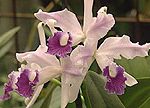
Cattleyas come in many different sizes, and in most colours except blue. Some species do best in a glasshouse, but others can be grown in the backyard. When purchasing cattleyas ask for advice on the most suitable species for your situation.
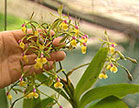
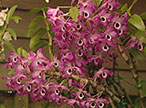
Dendrobiums are native to Asia and the Pacific, including Australia. There are over a thousand species, but David recommends trying the soft-caned (floppy) types in hanging pots under a verandah or pergola. These orchids usually require warm conditions with plenty of summer water and a dry resting period over winter.
Epidendrums originate in the Americas, from Florida to Argentina. There are hundreds of species and they vary tremendously. Some have leafy cane-like stems, others have pseudobulbs. They grow best in a warm, frost free climate.
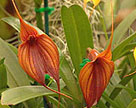
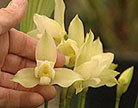
Lycaste are tree dwellers from tropical America. They have triangular shaped flowers in a range of colours including orange, yellow, green, pink, red and white. They need a bright, airy position with ample water during the growing season. The plants rest in winter and must be kept fairly dry.
Masdevallia species are found at high altitudes in the mountains of South America. There are also many hybrids in cultivation. Flower colours include white, yellow, purple, red, orange and pink. They grow best in controlled conditions in a greenhouse.
Miniature orchids have tiny flowers. An example is the Australian native, Dendrobium torresea, which has small yellow flowers about 3mm across.
Oncidiums are commonly called Dancing Ladies. The species usually cultivated are epiphytes, and often have arching sprays of brown and yellow flowers. They like a position in part shade, with high humidity. They are prone to root rot so must not be overwatered
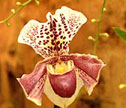
Paphiopedilum are commonly called slipper orchids, because the flowers have a characteristic pouched lip resembling the toe of a lady’s shoe. Most species need to be grown in part-shade and kept moist throughout the year. They like cramped conditions and rarely need repotting.
Phalaenopsis, also called moth orchids, have white or pink blooms on long arching stems. They do best in the tropics or subtropics, or in a warm, well ventilated greenhouse.
Sarcochilus species are easy to grow and make good specimen plants. These Australian native orchids like a shady position and plenty of moisture.
Lycaste (tulip orchid) Dendrobiums (soft cane) Paphiopedilum (Slipper orchid)
David’s tips
Orchids need regular fertilising and they need to grow in a suitable potting mix. They do not like strong fertilisers and many growers use special orchid food, but whatever fertiliser you use, David thinks the most important thing to remember is to feed little and often. He grows most of his orchids in one of two potting mixes – a cymbidium mix or another mix made up of 90% clean pine bark, 5% shellgrit (limestone chips) and 5% charcoal.
Further information
Orchids are available at nurseries and garden centres. Specialist orchid nurseries (such as the one listed below) stock a wider range of orchids, including many that are difficult to find. When purchasing orchids, seek the advice of nursery staff. They will suggest the best varieties for your climate and situation, and give you hints on growing them.
Floyd’s Orchid Nursery (where our segment was filmed)
22 Ascot Avenue
Wahroonga, NSW, 2076
Phone: (02) 9487 2783