
Harvesting
Harvesting
Growing your own fruit and vegetables is tremendously rewarding. However, knowing when the produce is ready for harvest can be a problem for many gardeners. Here are Don’s tips on harvesting tomatoes, pumpkins, figs, corn and olives.
Tomatoes (Lycopersicon lycopersicum)
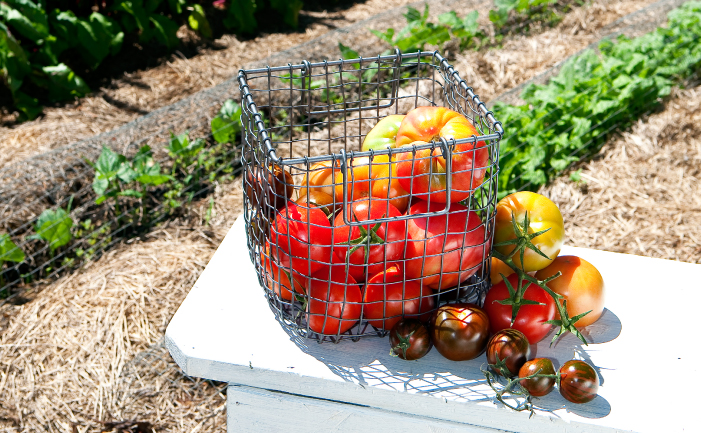
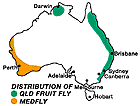
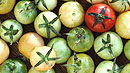
Tomatoes are ready for harvest from summer to autumn, although in warm, frost-free areas plants can crop all year round. Tomatoes that have been allowed to ripen on the vine have the best flavour. However, ripening fruits are particularly susceptible to fruit fly attack. If you are in a fruit fly area (see map) and wish to avoid spraying and fruit fly damage, it is best to pick your tomatoes full grown but green, then ripen them inside the house. Fruit flies do not lay eggs in blossoms or young fruit.
Pumpkin (Cucurbita maxima)
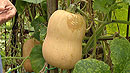
There are many varieties of pumpkins, from the small Butternut to the large Queensland Blue. Most pumpkins are ready for harvesting in autumn but as many of them don’t change colour and they don’t soften, it is difficult to tell if they are ripe. Wait until the vine starts to die off and the stem attached to the fruit withers and goes brown. Butternut pumpkins will colour to an all over sandy yellow.
The sunny roof of a corrugated iron shed is an excellent place to store your surplus pumpkins, provided they are not wet at the bottom. This allows the skins to harden or cure. After several weeks the pumpkins can be moved to a cool, dry, airy spot such as a laundry.
Figs (Ficus carica)
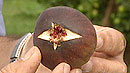
If you want to harvest your figs, fig trees must be covered with netting to protect the ripening fruit from birds, possums and flying foxes. The trees produce two crops a year, in autumn and spring. For maximum sweetness, pick the fruit when it is full size, and has started to split at the bottom. Some varieties such as ‘Brown Turkey’ will also develop a deeper colour as they ripen.
Corn (Zea mays)
Because corn is wind-pollinated, it is best planted in blocks rather than rows. The cobs ripen from summer to autumn, and are usually ready to pick about ten weeks from sowing. As a general rule, when the silks turn brown the corn is ready to eat. Inside the cob the kernels will be plump and full of a creamy liquid.
If you notice that some of the kernels have failed to develop although the cob is ripe, this is most likely due to poor fertilisation perhaps due to rain or a cold spell. For best flavour, cook corn immediately it is harvested.
Olives (Olea europaea var. europaea)
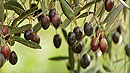
Some olive varieties are grown to produce olive oil, and others are grown for the table. Olives are ready for harvest in autumn. Pick them when they are full sized, but before the skin has started to soften. Because there is so much to learn about growing and curing olives, Don recommends buying a book and reading up on the subject before you choose your varieties and plant your trees. A good variety for the backyard for eating is the ‘Kalamata’ olive.
Recommended reading
For information about growing fruit and the cultivation and curing of olives see ‘The Complete Book of Fruit Growing in Australia’ by Louis Glowinski (Lothian Books, 1991, ISBN 0850918707, $49.94 ). Information on olives is also available from your local department of agriculture. The Australian Olive Association website is at: www.australianolives.com.au
And for information about growing vegetables: ‘Yates’ Garden Guide’ (2000, ISBN: 0207191891, $27.44 paperback).