

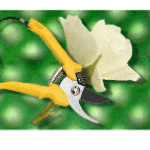
To get the best flowers from most roses you must prune them in winter. Roses can be pruned when they are dormant, between June and early August. Prune earlier in frost free coastal districts (usually July) but leave pruning until August in areas which experience spring frosts.
Pruning is not difficult. It is simply removing old growth to encourage vigorous new growth and lots of flowers.
Tip 1. Protective clothing:
Wear a jumper or thick long-sleeved shirt to protect your arms.
Choose thick but comfortable leather gloves.
Tip 2. Remove old growth:
Use a pruning saw to cut off the old grey wood right from the base of the plant leaving the younger green or red shoots. Shorten the thinner shoots to a height of about 50cm (1’8″) with sharp secateurs eliminating any thin wispy growth.
If your rose has been let go with only very old canes present then rejuvenation may take two years. Remove half of the old stems and shorten the remainder. This will encourage vigorous new shoots from the base of the plant to form a new framework. The remaining old stems can be removed the following year.
Tip 3. Spray with lime sulphur and mulch:
Once all the old growth has been removed spray the bush and surrounding soil with lime sulphur ($10.90 for 500mL) to destroy scale pests and fungal diseases.
Mulch around the base of the rose bush with a lucerne mulch to enrich the soil and prevent weeds from growing.
Tip 4. Remove unproductive rose bushes:
If a rose has not been performing well in the garden, don’t be afraid to remove it and replace it with a better variety. White Iceberg Rose (Rosa ‘Iceberg’) or the Blushing Pink Iceberg Rose (Rosa ‘Blushing Pink Iceberg’) are two of the best performing roses for your garden.
Further information
All specialist nurseries, many large garden centres, your local rose society and some botanic gardens offer demonstrations during July on rose pruning.