
|
|
|
In the Garden > Gardening Tips, Books, Techniques and Tools
Lawn areas and garden beds need a solid edge for clean, crisp definition and easy maintenance. In our segment Don discussed methods of edging and edging products.
Spaded edges
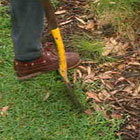
Dons personal preference is to use a sharpened spade to do garden edges. This is great exercise and you get a very good result. Line trimmers can also be used, and although the edge is not quite as crisp as one that is spaded, it is still perfectly satisfactory.
Flexible Roocycle Plastic
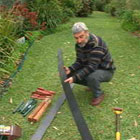
This recycled black plastic edging is 8mm thick and 100mm wide, and comes in 2.4m lengths. It is strong, yet it bends well around curves. The big drawback is that stocks are limited – there is only about a 6 months supply left in Australia.
Other plastic products
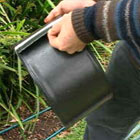
Other recycled plastic edging products are available. Most are sold in coils, which need to be laid out in the sun and straightened before use. These products are good for curved garden beds, but being fairly thin the edge tends to go a little bit wavy, particularly in hot weather.
Treated H4 timber
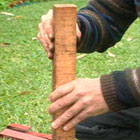
Logs, sleepers and pine edging are all good for straight, long lengths. They are easy to use and they give a subtle look because their colour blends with mulches. Keep in mind that line trimmers will mark timber edging.
Masonry
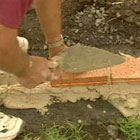
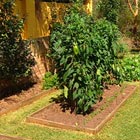
This type of edging is laid in a mortar bed. There are many different products available including bricks, different sized pavers, mini wall blocks, reconstituted sandstone, sandstone flagging, continuous concrete and decorative terracotta.
Flexible Roocycle Plastic edging costs about $5 per metre. Its available from Moodie Outdoor Products, phone (02) 9816 1133 or visit the website: www.moodie.com.au Plastic lawn edging costs about $2.60 - $3.50 per metre from hardware stores and garden centres. Brick edging costs around $2.95 - $3.50 per metre. Line trimmers cost between $150-$500 and are available from hardware stores.
Copyright CTC Productions 2003

|
|