
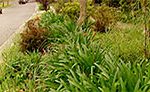
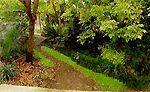
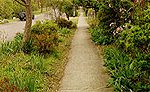
The verge, or nature strip, in front of a property can be a problem for homeowners. Many people put in a lawn, which has to be constantly mown and maintained. These strips of lawn often look dusty, dry and ugly, and have bare patches and tracks worn through them by pedestrians, kids and the postman. Another option is to plant out the footpath with some groundcovers, or extend the garden right out to the street.
A good idea or not?
Nature strip plantings require less maintenance than lawns, and they can improve the look of the street and the area. There are also environmental benefits, because verge gardens capture more runoff and reduce the amounts of litter entering the stormwater system. They use less fertiliser than lawns, and they provide habitats for birds and animals. On the other hand, footpath plantings can be a safety concern. They can restrict access for pedestrians, reduce visibility for car drivers and become a maintenance liability for the council if the owners move.
Examples shown in our segment
Don looked at a nature strip planted with a mixture of tree ferns (Cyathea cooperi), bird’s nest ferns, lilly pillies and camellias. Although this garden looked great, it posed a safety problem because the tall shrubs were planted under powerlines, and reduced visibility for car drivers coming in and out of driveways. Access for pedestrians was also restricted. Parents pushing prams, people with disabilities and elderly people would find it very difficult to push past the overhanging branches, particularly in wet weather.
Last year we showed a segment which featured a charming nature strip planting of daffodils, iris and daisies. Another successful verge garden included low growing plants such as agapanthus (Agapanthus praecox), azaleas and violets, as well as two very good grevilleas – ‘Honey Gem’ and ‘Firesprite’.
Grevillea ‘Honey Gem’ isa semi-tropical grevillea that is a hybrid between Grevillea banksii and Grevillea pteridifolia. For most of the year it produces golden yellow flowers that are extremely bird attracting. Although tall growing (between 3-5m or 10-15′ tall) it can be kept smaller with regular pruning, and should not pose a problem when planted under powerlines or restrict passers by.
Grevillea ‘Firesprite’ was bred bygrevillea authority Merv Hodge. Itis a hybrid of Grevillea longistyla (a grevillea from the Blackdown Tableland area in Queensland) and Grevillea venusta (from the Port Curtis district in Queensland). It grows to 3-5m (10-15′) tall and approximately 2m (6′) in width. It is a reasonably fast growing plant with fiery red flowers with a touch of green, and bright green, deeply lobed leaves. As with ‘Honey Gem’, ‘Firesprite’ can be pruned to control its size and shape.
Footpath planting tips
Contact your local council and discuss your plans before you start planting Use low growing species Do not plant tall trees or shrubs under powerlines Make sure the plants you choose don’t reduce visibility for drivers Maintain access for pedestrians Keep the verge tidy and prune shrubs whenever necessary