
In the days of the Crusades, chastity belts were considered the means to keep a wife virtuous while her husband headed off for war. Chastity belts were very difficult to open, and legend has it that they were inspired by the difficult to open chestnut.
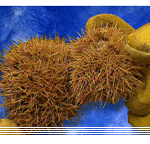
Some chestnut varieties open when they come off the tree, but in Australia, most old chestnut trees are seedlings and their fruit can be as hard to get into as a chastity belt. The chestnut fruit should be handled with thick gloves and to remove nuts from their casing, wear heavy boots and squash slightly underfoot. Great care should be taken if a knife is used to open the burr.
Tip: While roasting is the traditional cooking method for chestnuts, an easy alternative is to boil them for 20 minutes then drain. Peeling is easy if they are properly cooked. Dip them in butter and salt for a delicious winter treat.
If you have a large garden you may wish to grow your own chestnut tree but they can dominate the garden as they grow at least 20m (67′) in height and width. Now is the time to purchase bare-rooted plants. The best grafted varieties which shed their nuts easily are: ‘Purdon’s Pride’, ‘Wandenberg’ and ‘De Coppi Maroni’. These are available from: Ardern & O’Kane, 3 Banool Avenue, Myrtleford, VIC, 3737. Phone: (03) 5752 1750 or (03) 5752 1505. Prices range from $12 – $25.
Care: Chestnut trees need deep, rich, fertile soil. Seedlings can take about ten years to fruit, but grafted plants can bear the first fruit in two years. No pruning is necessary except for a little to shape the plant in the first year or two. Chestnuts are attractive to both parrots and possums.
Further information
For more information on growing chestnuts, contact Chestnut Growers of Australia Ltd., PO Box 319, Myrtleford, VIC, 3737.