
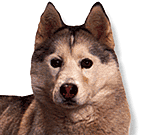
Breed: Siberian Husky
Temperament: friendly, easily bored
Lifespan: 12-14 years
Maintenance: medium
Recommended for: devotees, very active, responsible people
From obscurity in the 1980s to the 12th-most popular breed in Australia today, the Siberian Husky has had a meteoric rise in popularity.
Appearance
Many owners of Siberian Huskies are asked ‘is it a wolf?’ and some studies in fact consider it the domesticated dog breed closest in temperament to the wolf. Standing about 60cm (23″) and weighing 27kg (60lb) it is smaller than its cousin the Alaskan Malamute, but features the distinctive ‘mask’ and darker-tipped fur. Many have striking ice blue eyes although brown, odd-eyed blue and brown, and speckled blue-brown eyes are also seen. The coat is thick, double and colours include red and white, black and white, grey and white and creamy-white.
Temperament
The Husky club is very keen to match the right sort of people with their dogs. While most Huskies are outgoing, alert, and affectionate, some will develop dominance strategies to move up the social ladder within the family structure. Prospective buyers should be aware of the possibility of these behaviours and be prepared to deal with any budding situation firmly and with commonsense. If left alone for long periods they can be destructive.
Ideal owner, exercise and training
The happiest Husky is one owned by an active person or family with a strong sense of responsibility, who will give it plenty of exercise (one book suggests 1-2 hours daily!) and has a firm, consistent training routine. Breeders strongly recommend new owners attend dog training classes with their puppy and to always exercise the dog on a leash. Owners say the Siberian Husky has no road sense and if let off a leash, or it escapes, it will just run and run.
Space
This is not a breed suitable for a flat or homes without a large yard unless the owner is an extremely active person prepared to exercise their pet for several hours a day.
Health
Some eye problems are being discovered in Siberian Huskies, as well as some degree of hip dysplasia. Breeders have also noted potential heart problems. Always try to see the pup’s parents.
Grooming
Siberian Huskies shed their winter coats in spectacular amounts and daily brushing is vital otherwise hair will be left everywhere! The coat also sheds during the seasonal transition into winter but to a lesser extent. A thorough brushing every few days at other times of the year will keep the dog neat.
Training
Training is especially important in a dog of this size and strength and breeders urge new owners to attend training classes – as much for their education as for the pup. Some owners recommend bonding the dog with a toy or food for reward-based training. Creative training techniques may be needed as the dogs are easily bored!
National contacts
To find up-to-date contacts for breeders, contact the following organisations.
Dogs NSW
www.dogsnsw.org.au
Email: [email protected]
Phone: (NSW only) (02) 9834 3022
Dogs Victoria
http://www.vca.org.au
Email: [email protected]
Phone: (03) 9788 2500
Dogs ACT
https://dogsact.org.au
Email: [email protected]
Phone: (02) 6241 4404 –
Dogs West
https://www.dogswest.com/dogswest/Home.htm
Email: [email protected]
Phone: (08) 9455 1188
Dogs SA
http://www.dogssa.com.au
Phone: (08) 8349 4797
Canine Control Council of Queensland
https://dogsqueensland.org.au
Email: [email protected]
Phone: (07) 3252 2661
Tasmanian Canine Association
http://www.tasdogs.com
Email: [email protected]
Phone: (03) 6272 9443
Dogs NT
https://www.dogsnt.com.au
Email: [email protected]
Phone: (08) 8984 3570