
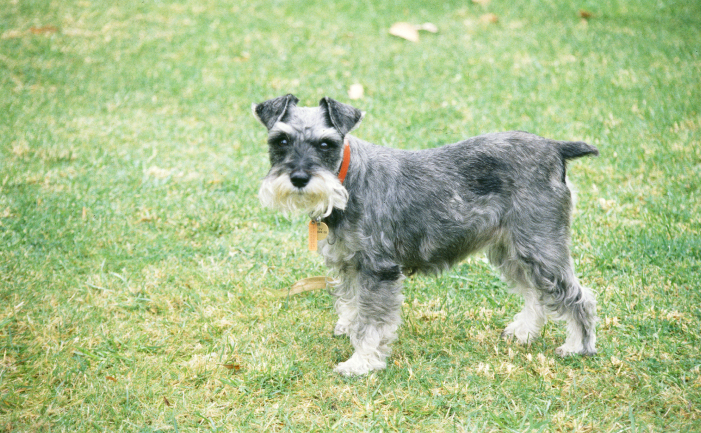
Schnauzer
Breed: Schnauzer (Miniature, Standard and Giant)
Temperament: bold, alert, loyal
Lifespan: 12 – 16 years
Recommended for: school age children, energetic people
Maintenance: medium to high
Dumpage Rate: low
History
The Schnauzer originated in Germany (Bavaria), where the standard and giant breeds were used for herding cattle and as guard dogs. The word ‘Schnauze’ in German means muzzle. Records of Schnauzer-type dogs date back to the 16th century and the breed is thought to have Poodle, Pinscher and Spitz ancestry. Standards arrived in Australia in 1934, miniatures in 1962 and giants in the 1970’s.
Appearance
Schnauzers come in three sizes – miniature, standard and giant. They have a robust, almost square shape. The eyebrows are prominent and it has generous whiskers and a moustache. The miniature will reach 33-36cm (13-14″) in height and weigh around 7kg (15lb). Standards are around 45-47cm (18-19″) and 13-18kg (30-40 lb). Giants reach about 56-69 cm (25-27″) tall and weigh 36-50kg (80-110 lb). There are three coat colours: salt and pepper (probably the most common); solid black (most giants are black); and black and silver.
Temperament
Because they are bold and alert, Schnauzers are considered to be good watchdogs. Most owners say they are good with children but can be wary of strangers. Although there have been reports of some Schnauzers being aggressive, overall the temperament of the breed is good.
Health and lifespan
Overall, Schnauzers are a robust breed, but there are some problems. They are sometimes born with heart defects so when buying a puppy, make sure it has been checked thoroughly by a veterinary surgeon and that the parents are free from heart defects. On occasion, some inherited disorders may be seen in the Schnauzer, including cataracts, bladder stones and hip dysplasia. Most breeders are aware of these potential problems and take action to avoid using afflicted dogs in breeding programmes.
Miniatures and standards will live for 14-16 years, while giants average 12 years.
Feeding
Depending on the size, Schnauzers cost between $7 and $15 to feed weekly.
Breeding
Average litter sizes vary from around 3 to 6 for the mini to 3 to 12 for the giant.
Cost
Prices vary from around $800 for pets to $1500 plus for show quality dogs.
Housepet Potential
Most owners describe Schnauzers as clean, friendly, family dogs which are quickly house trained. They make a very good child’s pet but need to be socialised with children while still young.
Space and exercise
Standards and giants need a backyard but many miniatures are kept in units. A yard is preferable however and all Schnauzers enjoy regular walks.
Ideal Owner
Schnauzers can be quite dominant if they are allowed to get away with it. They require owners who are committed to training them in obedience. Potential owners are best to choose a breed according to the size and energy level of they are able to accommodate. Miniature Schnauzers were originally bred to be proficient ratters and tend to chase small animals if they get the chance. They do best when kept as the only pet in the house.
Grooming
Exhibition Schnauzers have their coats ‘stripped’ six to eight weeks before a show. Stripping is a time-consuming process which involves plucking the hair out by hand, usually three or four sessions of around an hour over a few weeks. This means the coat should regrow neatly in time for the show. Pet Schnauzers are usually clipped approximately every eight weeks by their owners or trimmed professionally for $30 $50 per visit. They do not moult. Always keep the head well groomed and trim around the eyes to prevent matting and eye problems.
Trainability
Schnauzers are described by their owners as ‘quick learners’ but are easily bored. They have a reputation for ability in obedience and agility work.
Uses
In Australia, Schnauzers are considered good companions and watchdogs. All three sizes are increasingly used as pets for therapy. Overseas, giant Schnauzers are used for guard and rescue duties.
Popularity
In 1999 the Miniature Schnauzer was ranked in 22nd in popularity from 180 breeds by the Australian National Kennel Council.
National contacts
To find up-to-date contacts for breeders, contact the following organisations.
Dogs NSW
www.dogsnsw.org.au
Email: [email protected]
Phone: 1300 728 022 (NSW only) or (02) 9834 3022
Fax: (02) 9834 3872
Dogs Victoria
http://www.vca.org.au
Email: [email protected]
Phone: (03) 9788 2500
Fax: (03) 9788 2599
Dogs ACT
http://www.actca.asn.au
Email: [email protected]
Phone: (02) 6241 4404 – Fax: (02) 6241 1129.
Dogs West
http://www.cawa.asn.au
Email: [email protected]
Phone: (08) 9455 1188
Fax: (08) 9455 1190
Dogs SA
http://dogssa.com.au
Phone: (08) 8349 4797
Canine Control Council of Queensland
http://www.cccq.org.au
Email: [email protected]
Phone: (07) 3252 2661
Fax: (07) 3252 3864
Tasmanian Canine Association
http://www.tasdogs.com
Email: [email protected]
Phone: (03) 6272 9443
Fax: (03) 6273 0844
Dogs NT
http://www.territorydogworld.com
Email: [email protected]
Phone: (08) 8984 3570
Fax: (08) 8984 3409