
Neapolitan Mastiff
Breed: Neapolitan Mastiff
Temperament: strong-willed, loyal
Lifespan: 8-10 years
Maintenance: medium-high
Recommended for: dedicated dog owners
Background
In Ancient Rome dogs were bred to serve the great Roman armies. Throughout history these dogs have remained sought after for their strength and size and were often used as fighting dogs. Despite centuries of popularity throughout Europe, this type of dog was almost lost after World War II. Soon after the war, Italian painter Piero Scanziani established a breeding kennel to turn the mastiff-type dogs of Italy into a formal breed which was then named the Neapolitan Mastiff. Although the breed’s background is widely associated with fighting and war, the modern Neapolitan Mastiff is far removed from those origins. Neapolitan Mastiffs are very new to Australia having been first imported in 1991.
Appearance
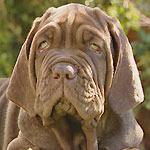
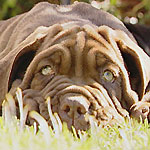
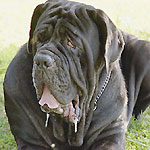
Neapolitan Mastiffs are one of the largest dog breeds with males weighing up to 80kg and measuring 65-75cm (26-30″). They are heavy boned and thickset with a big broad head. The most distinguishing feature of the dog is its very loose skin particularly around the head. The skin forms numerous dewlaps (folds) from which saliva will drip. During the height of the Mastiff’s fighting popularity the practice of ear cropping was undertaken. Overseas the ears can still be surgically cropped but, in Australia the ears are not cropped. The tail is one third docked in accordance with overseas standards. The Neapolitan Mastiff has a short shiny coat and comes in black, grey, tawny and mahogany. An interesting characteristic is way the dog moves and some owners liken it to a big cat, slow but fluid. The movement is due to the connective tissue gene that causes the loose skin. The gene causes the joints to be looser.
Temperament
Despite their size and ferocious history, today’s Neapolitan Mastiffs are calm and placid in nature. They are better described as a gentle giant than an aggressive fighter. Neapolitans are strong minded and will not respond to harsh treatment. They will learn respect through good training and a stern voice. One US breeder describes their character as such “it’s a bit like asking your husband to take out the rubbish…he might do it later.” Neapolitans are very easy going and fairly even tempered, but they can also be pretty big sooks. These dogs are large, cumbersome and often clumsy. They have a reputation as efficient guard dogs, but they are better suited to life as a companion. There is not much that will faze them and they need a more serious situation to respond in an aggressive manner. The Neapolitan’s success as a guard dog rests mostly on its appearance. The dog will stop and stand its ground with a stare. They also have a deep loud bark, that usually warns off approaching strangers.
Training
Training and discipline are essential in Neapolitan Mastiffs especially when they are young. The first 12 months is the most important time to show the dog who is in charge. They do need a lot of input from the owner to get the required result and disciplining the dog quickly and firmly is the best method. They need consistent contact with people and will bond with the entire family. Giving the dog lots of experience with different situations and stimuli will reduce potential problems.
Care and maintenance
The first 12 months are the hardest as Neapolitan puppies grow very fast and can reach 40-50kg at six months. During this time owners must be careful with food and exercise. Don’t over exercise when young and restrict jumping or climbing. For young puppies play is enough exercise. All dogs can have free play in the backyard but must be supervised to prevent accidental injuries. The diet must be completely balanced particularly in regard to calcium. Use a balanced feed for giant breeds and contact your vet for advice on on-going dietary needs as your pup grows.
After 12 months the dogs become more low maintenance and will spend most of their time lying down and sleeping so encourage gentle exercise and activity. Dogs can get bored and destructive in a confined yard without extra stimulation.
Grooming
Neapolitan Mastiffs do salivate heavily particularly when they are hot or after eating and drinking. If they want to come inside the house you will have to wipe their mouths and faces with a towel. They shed fur as their coat drops about once a year but otherwise do not require special grooming. Be warned however these dogs do have a distinctive smell.
Health and lifespan
Because the breed is still new to Australia establishing which genetic problems exist in the local gene pool is difficult. Breeders are aware of hip, elbow and joint problems as well as entropion (turned in eyelids) but cannot accurately trace the patterns yet. We recommend only purchasing puppies from parents who have been x-rayed and are clear of joint problems. Neapolitan Mastiffs will live for around 8 to 10 years. Due to their size, vet bills are much higher if problems arise and, because they are a new breed, many Australian vets may not have experience with them.
There are only about five major breeders of Neapolitan Mastiffs in Australia. For this reason Neapolitans are very expensive to buy. Puppies that are offered at lower prices may not be top quality. Always check both parents and their health before purchasing a puppy.
Recommended for
Neapolitan Mastiffs are not for the faint hearted. If you ever wanted a dog in your life you will certainly know you have one if you choose this breed. Like all big boned dog breeds, Mastiffs demand a lot of attention and care to avoid health and temperament problems. They are not a child’s dog, but are fine with families as long as the adults are in charge. A large backyard is not necessary but it may be a good idea to allow the dogs to eat and drink outside. They are mature minded, not 100% obedient and demand you get fully involved.
National contacts
To find up-to-date contacts for breeders, contact the following organisations.
Dogs NSW
http://www.dogsnsw.org.au/breeders-directory
Email: [email protected]
Phone: 1300 728 022 (NSW only) or (02) 9834 3022
Fax: (02) 9834 3872
Dogs Victoria
http://www.vca.org.au
Email: [email protected]
Phone: (03) 9788 2500
Fax: (03) 9788 2599
Dogs ACT
http://www.actca.asn.au
Email: [email protected]
Phone: (02) 6241 4404 – Fax: (02) 6241 1129.
Dogs West
http://www.cawa.asn.au
Email: [email protected]
Phone: (08) 9455 1188
Fax: (08) 9455 1190
Dogs SA
http://dogssa.com.au
Phone: (08) 8349 4797
Canine Control Council of Queensland
http://www.cccq.org.au
Email: [email protected]
Phone: (07) 3252 2661
Fax: (07) 3252 3864
Tasmanian Canine Association
http://www.tasdogs.com
Email: [email protected]
Phone: (03) 6272 9443
Fax: (03) 6273 0844
Dogs NT
http://www.territorydogworld.com
Email: [email protected]
Phone: (08) 8984 3570
Fax: (08) 8984 3409