
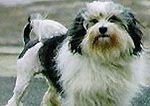
Lowchen Dogs
Breed: Lowchen (pronounced low as in cow; shan)
Temperament: affectionate, spirited
Maintenance: low (pets) High (showdogs)
Lifespan: 13-14 years
Recommended for: families
History
The history of the Lowchen is quite uncertain as no-one is quite sure exactly where the breed originated. It is believed that the breed may have been developed somewhere in Eastern Europe between Russia and the Mediterranean. It was the Europeans who first embraced the breed and by the 1500s they were hugely popular in France, Germany, Italy and Spain where they were kept by the aristocracy. It was then that shaving the dogs became popular as they were apparently used as hot water bottles. The shaved area of the dog allowed the owner to have direct contact with the skin of the animal and this provided instant warmth.
Over the centuries the breed lost popularity and the Guinness Book of Records declared the Lowchen as the rarest breed in the world in the 1960s. Today, although not common, they are no longer considered rare. In Australia the breed has been around since 1970s.
Temperament
Despite its rather fragile presentation, the Lowchen is reported to make an excellent guard dog. However, due to their size and somewhat puppy like behaviour a Lowchen is more likely to bark and warn off strangers, rather than deter them. They are friendly, bright and loyal. Training is advisable, but some dogs can be slow to learn. They are active and lively dogs that enjoy playing with the family and this kind of behaviour will continue for the duration of the dog’s life. Some owners say they can be “clowns” and are not that easy to train. Despite this, they are truly lovable and settle into a home very quickly.
Appearance
Lowchens are considered part of the Bichon group, but are highly recognisable due to their unique clipped and shaved appearance. Unclipped dogs have a long coated scruffy look. They have a short small body with a short head and dark nose and should grow no taller than about 35cm. They vary in colour from chocolate and apricot, chocolate and cream, gold, sable, black and tan, blue and cream, and parti-colours. (Chocolate are difficult to come by.) The coat is long and wavy, especially around the ears.
Clipping
The dog has been traditionally clipped as the “king of the beasts” to mimic the look of a lion. “The tail is clipped along the part of its length, leaving just a plume of hair.” The hind quarters are closely shaved also leaving the feet. The forelegs are also groomed to match the back. Like poodles, the Lowchen is clipped for show purposes only. Clipping is done at close range with an electric shaver to reveal the spotted skin. It will take tuition from another Lowchen owner and some practice before this clip style is mastered.
Maintenance
The Lowchen needs grooming whether it is kept in lion clip or not. However, if the dog is clipped all over, like many pet dogs, it may require less attention. Any dog kept with long hair will need two good half hour grooming sessions a week to keep their coats in check. Lowchens kept as pets should be clipped once or twice a year for ease of care. This can be done professionally or at home with scissors or clippers.
Exercise
Being small in size the Lowchen can live in a small space if given regular long walks. They are active and do like to play and run around, so a bigger yard is better, but not essential.
Health and lifespan
They are a robust and healthy dog and should live 13 to 14 years. They can have defective knee joints (luxating patellas) and this conditions is hereditary.
Recommended for
This is one small dog that can be kept in virtually any dwelling, small or large, as long as it is exercised regularly. They are suitable for children (although very small children should not be put with puppies) and adults alike, even the elderly. However, their “silly” and often puppy like behaviour may not suit some potential owners.
National contacts
To find up-to-date contacts for breeders, contact the following organisations.
Dogs NSW
http://www.dogsnsw.org.au/breeders-directory
Email: [email protected]
Phone: 1300 728 022 (NSW only) or (02) 9834 3022
Fax: (02) 9834 3872
Dogs Victoria
http://www.vca.org.au
Email: [email protected]
Phone: (03) 9788 2500
Fax: (03) 9788 2599
Dogs ACT
http://www.actca.asn.au
Email: [email protected]
Phone: (02) 6241 4404 – Fax: (02) 6241 1129.
Dogs West
http://www.cawa.asn.au
Email: [email protected]
Phone: (08) 9455 1188
Fax: (08) 9455 1190
Dogs SA
http://dogssa.com.au
Phone: (08) 8349 4797
Canine Control Council of Queensland
http://www.cccq.org.au
Email: [email protected]
Phone: (07) 3252 2661
Fax: (07) 3252 3864
Tasmanian Canine Association
http://www.tasdogs.com
Email: [email protected]
Phone: (03) 6272 9443
Fax: (03) 6273 0844
Dogs NT
http://www.territorydogworld.com
Email: [email protected]
Phone: (08) 8984 3570
Fax: (08) 8984 3409