
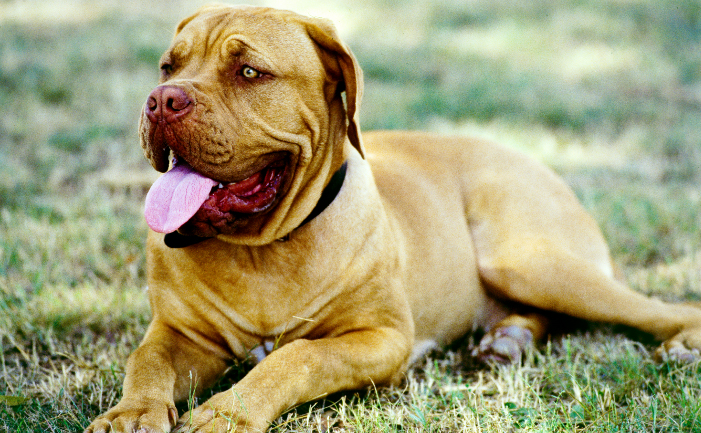
Dogue de Bordeaux
Breed: Dogue de Bordeaux
Temperament: protective, loyal
Lifespan: 8-12 years
Recommended for: enthusiasts According to breed notes, the word dogue first appeared at the end of the 14th century and is French for ‘mastiff’. It is correctly ‘dog’, although some owners pronounce it to rhyme with ‘vogue’.
A visually-spectacular breed, individuals range in size from 58-68cm (23-27″) and weigh 45-50kg (100-120lb), so it’s not hard to believe the Dogue de Bordeaux forebears are said to have accompanied gladiators into battle, and later battled each other in the name of sport.
Despite their violent history, breeders say the modern Dogue’s temperament is usually placid but they can be very protective and loyal to their family. However, small children should not be left unsupervised with a Dogue – as one Net site described it: “Remember that even though the body is large, the mind is till young. It is common for a 7-month-old puppy to knock over …a man while playing, or attacking!”
Health: Bone structure is a site of vulnerability: diseases such as hip dysplasia are known, while the jaw is undershot so teeth need to be checked by a vet regularly.
The wrinkled face means some dogs can have problems with entropion (rolled-in eyelids), while skin problems include mange. Care should also be taken to avoid feeding the dog immediately after exercise as, like many large-chested breeds, bloat is a risk.
Uses: In past centuries in France Mastiff-type dogs were used for hunting and guarding, as well as providing ‘entertainment’ fighting bulls, bears, and even jaguars. Even today the sight of an adult should be enough to deter would-be intruders. They make an affectionate family companion.
Breeding: There are usually 5-9 puppies in a litter. Newborn puppies may be crushed if their mothers sit or roll onto them.
Housepet potential: While breed enthusiasts do keep their Dogue de Bordeaux indoors, it may be considered too big to be kept inside by most people. Still, their comparative rarity and cost may change the mind of some new owners!
Space, training & exercise: Thorough training is vital for breeds as large as this. Early socialisation is another essential practice, and exposure to other dogs, under strict control, is also beneficial. A medium yard should be adequate and a daily walk of 30 minutes is recommended.
Grooming: Breeders advise a five-minute daily brush should remove loose hairs. Check daily for dust in the eyes, facial wrinkles and ears, and wipe out with a soft cloth when necessary.
Popularity: The Dogue de Bordeaux is considered rare, even in France. They arrived in Australia in 1994, and there are only about 200 Dogues here today.
National contacts
To find up-to-date contacts for breeders, contact the following organisations.
The Australian National Kennel Council (ANKC)
www.ankc.org.au
Dogs NSW
http://www.dogsnsw.org.au/breeders-directory
Email: [email protected]
Phone: 1300 728 022 (NSW only) or (02) 9834 3022
Fax: (02) 9834 3872
Dogs Victoria
http://www.vca.org.au
Email: [email protected]
Phone: (03) 9788 2500
Fax: (03) 9788 2599
Dogs ACT
http://www.actca.asn.au
Email: [email protected]
Phone: (02) 6241 4404 – Fax: (02) 6241 1129.
Dogs West
http://www.cawa.asn.au
Email: [email protected]
Phone: (08) 9455 1188
Fax: (08) 9455 1190
Dogs SA
http://dogssa.com.au
Phone: (08) 8349 4797
Canine Control Council of Queensland
http://www.cccq.org.au
Email: [email protected]
Phone: (07) 3252 2661
Fax: (07) 3252 3864
Tasmanian Canine Association
http://www.tasdogs.com
Email: [email protected]
Phone: (03) 6272 9443
Fax: (03) 6273 0844
Dogs NT
http://www.territorydogworld.com
Email: [email protected]
Phone: (08) 8984 3570
Fax: (08) 8984 3409
The Australian National Kennel Council (ANKC)
www.ankc.org.au
Dogs NSW
http://www.dogsnsw.org.au/breeders-directory
Email: [email protected]
Phone: 1300 728 022 (NSW only) or (02) 9834 3022
Fax: (02) 9834 3872
Dogs Victoria
http://www.vca.org.au
Email: [email protected]
Phone: (03) 9788 2500
Fax: (03) 9788 2599
Dogs ACT
http://www.actca.asn.au
Email: [email protected]
Phone: (02) 6241 4404 – Fax: (02) 6241 1129.
Dogs West
http://www.cawa.asn.au
Email: [email protected]
Phone: (08) 9455 1188
Fax: (08) 9455 1190
Dogs SA
http://dogssa.com.au
Phone: (08) 8349 4797
Canine Control Council of Queensland
http://www.cccq.org.au
Email: [email protected]
Phone: (07) 3252 2661
Fax: (07) 3252 3864
Tasmanian Canine Association
http://www.tasdogs.com
Email: [email protected]
Phone: (03) 6272 9443
Fax: (03) 6273 0844
Dogs NT
http://www.territorydogworld.com
Email: [email protected]
Phone: (08) 8984 3570
Fax: (08) 8984 3409