
Breed: Dalmatian
Temperament: energetic, boisterous
Lifespan: 12-14 years
Maintenance: low
Recommended for: families without toddlers, active people
History
A little known region in Croatia, called Dalmatia, is said to be the historical home of the Dalmatian. There are some records of spotted dogs being present in Croatia, but nothing to support the theory that they originated there. Historical evidence of spotted dogs is also recorded in North Africa and Asia.
Dalmatians reportedly became popular amongst carriage drivers in England in the 19th century. They were known to trot alongside the carriage to ward off attacks from highwaymen. Although there is no doubt that other types of dog were also used for this purpose, Dalmatians became known as the quintessential ‘carriage dog’. Its popularity even extending to that of an escort and mascot for United States metropolitan fire trucks.
The Dalmatian is a very popular breed all around the world. The breed regularly hovers around the top twenty most popular breeds in Australia.
Appearance
The breed as we know it today has physical characteristics similar to both pointers and hounds, however the Dalmatian is used neither for scent work nor as a gun dog. Its primary use, both historically and currently, is as companion and guard dog.
Much like the Pharaoh hound, Greyhound and Whippet, the coat is short, dense, fine and close fitting. The balanced, strong and muscular physique, without bulk or coarseness, is also very much like that of the gundogs – the Pointer, Weimaraner or the German
Shorthaired Pointer.
Dalmatians are large dogs, ranging in height from 56-60cm (22-24″) and weigh about 23-28kg (50-62lb). Bitches are invariably at the smaller end of the scale.
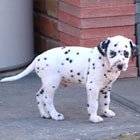
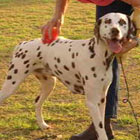
The main characteristic which defines the Dalmatian is its spots. Born with white hair and small pigmented spots in the skin, the coloured spots develop at around two to three weeks and the nose will darken at about three months of age. The spots continue to form with age usually up to two or three months, developing into either black or brown, called liver. The spots should be round, clearly defined and not overlapping.
Temperament
Well bred dalmatians are loyal and loving companions and are eager to please their owners. They make excellent watchdogs. Although not yappy, they will however alert their owner if something is amiss. They are powerful, active and boisterous dogs that do need discipline. You can expect young pups to dig holes in the yard and chew up your plants too. At least until the dog has matured and learned some obedience. With an average working dog intelligence, the Dalmatian will enjoy obedience training and excels at agility classes. Dalmatians have a stable, outgoing nature which suits an active family.
In the mid 1990s, increased popularity due to high public exposure from films such as 101 Dalmatians led to over-breeding by some unscrupulous profit seekers. Little regard was made for the health and mental well-being of the breed, leading to issues relating to poor health and dubious temperament. Not all breeders were so careless, and it is important to purchase puppies from reputable breeders. Check with the local dalmatian clubs.
Health and lifespan
A Dalmatian’s white coat and pale pigmentation will contribute to the likelihood of sunburn. The most susceptible areas, the nose, ears and eye-rims, will be less inclined to burn where more pigment is present.
A metabolic defect unique to the Dalmatian breed can lead to liver and subsequent bladder problems, resulting in bladder stones. This is a heritable disease and is best avoided by purchasing from breeders whose dogs do not possess the condition. Encouraging the dog to drink plenty of water will minimise the effects of the disease.
In past veterinary journals, deafness was reported in up to 30% of the breed. Breeders say this figure is not representative of Australian lines. Deafness will usually show up in puppies by about four weeks of age. People considering buying a Dalmatian puppy should deal with a reputable breeder and always have the dog’s hearing checked.
Another problem reported by breeders is allergies which may result in skin lesions. Paspalum grass is one known cause of these allergies.
Dalmatians live for between 12-14 years.
Maintenance
While they do not have a strong doggy odour a fortnightly bath is adequate. When a dalmatian sheds, the white hair is very noticeable and daily wiping with a rubber glove will remove most loose hairs.
Breeding and costs
Dalmatians have large litters of between eight to eleven puppies and they whelp easily. Dalmatians range in price from $500 for a pet up to $700 for a show quality dog.
Space
Most Dalmatians find an average to large backyard adequate, but they are a breed of great physical endurance, able to travel at a moderate pace for great lengths of time. A morning and evening walk is recommended to burn off energy and stimulate the dog’s mental well-being. Breeders warn Dalmatians have little road sense and need a well fenced backyard.
Recommended for
Although not ideal for an elderly person, a dalmatian does make a great pet for athletic people, runners, joggers and young families. They are considered good family pets but one should be conscious of their exuberance around toddlers and small children.
National contacts
To find up-to-date contacts for breeders, contact the following organisations.
The Australian National Kennel Council (ANKC)
www.ankc.org.au
Dogs NSW
http://www.dogsnsw.org.au/breeders-directory
Email: [email protected]
Phone: 1300 728 022 (NSW only) or (02) 9834 3022
Fax: (02) 9834 3872
Dogs Victoria
http://www.vca.org.au
Email: [email protected]
Phone: (03) 9788 2500
Fax: (03) 9788 2599
Dogs ACT
http://www.actca.asn.au
Email: [email protected]
Phone: (02) 6241 4404 – Fax: (02) 6241 1129.
Dogs West
http://www.cawa.asn.au
Email: [email protected]
Phone: (08) 9455 1188
Fax: (08) 9455 1190
Dogs SA
http://dogssa.com.au
Phone: (08) 8349 4797
Canine Control Council of Queensland
http://www.cccq.org.au
Email: [email protected]
Phone: (07) 3252 2661
Fax: (07) 3252 3864
Tasmanian Canine Association
http://www.tasdogs.com
Email: [email protected]
Phone: (03) 6272 9443
Fax: (03) 6273 0844
Dogs NT
http://www.territorydogworld.com
Email: [email protected]
Phone: (08) 8984 3570
Fax: (08) 8984 3409
The Australian National Kennel Council (ANKC)
www.ankc.org.au
Dogs NSW
http://www.dogsnsw.org.au/breeders-directory
Email: [email protected]
Phone: 1300 728 022 (NSW only) or (02) 9834 3022
Fax: (02) 9834 3872
Dogs Victoria
http://www.vca.org.au
Email: [email protected]
Phone: (03) 9788 2500
Fax: (03) 9788 2599
Dogs ACT
http://www.actca.asn.au
Email: [email protected]
Phone: (02) 6241 4404 – Fax: (02) 6241 1129.
Dogs West
http://www.cawa.asn.au
Email: [email protected]
Phone: (08) 9455 1188
Fax: (08) 9455 1190
Dogs SA
http://dogssa.com.au
Phone: (08) 8349 4797
Canine Control Council of Queensland
http://www.cccq.org.au
Email: [email protected]
Phone: (07) 3252 2661
Fax: (07) 3252 3864
Tasmanian Canine Association
http://www.tasdogs.com
Email: [email protected]
Phone: (03) 6272 9443
Fax: (03) 6273 0844
Dogs NT
http://www.territorydogworld.com
Email: [email protected]
Phone: (08) 8984 3570
Fax: (08) 8984 3409