
Environmental Special
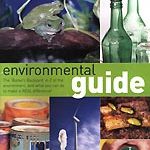
Many people are concerned about the welfare of the planet, but are unsure about what they can, or should do to help. In the past, scientists, government bureaucrats and the media told us a lot of things that simply did not make sense, and this has led to much confusion. At Burke’s Backyard we have just completed a two-year research project into environmental issues. This has resulted in the Burke’s Backyard Environmental Guide, which is attached to the current (October) edition of the Burke’s Backyard magazine. You can use this guide to find out what you can do to really help the environment, or whether something you are already doing is beneficial, a waste of time, or even harmful.
Real credentials
It is important to look at the genuine credentials of anyone who is advising you about the environment. How do they live themselves? Are they genuinely making things work for the environment? What is their backyard like? Members of the Burke’s Backyard team, including Rosemary Stanton, Jackie French and John Dengate, are very dedicated to the environment. Every week the program is filmed in Don’s backyard, which is on show for everyone to see. It is a healthy mini-ecosystem, teeming with Australian native birds, animals and plants. Don looked at some of the things that happen on his property and came up with a few suggestions which will make a difference to the environment.
Septic tanks
Australian native plants cannot tolerate septic effluent, so if you care about the environment keep septic effluent away from bushland and watercourses. There are two types of septic systems. Old systems essentially break the waste down in a tank and let it seep into the soil, which is potentially hazardous to the environment. The new systems (known as Aerated Waste Water Systems) have a series of tanks that break down the waste to such a state that the water can be used on the property. This system is more environmentally friendly as it keeps sewage out of watercourses and bushland. All outflow from these systems should be used with a sprinkler system to irrigate areas of grass. To reduce problems with your septic system avoid putting solids down the drain, and keep the use of cleansers (bleach, disinfectants and stain removers) to the minimum. Even if you are not on a septic system, pretend you are and avoid putting solids and harsh cleaning products down the toilet. This will reduce environmental problems, particularly where sewage enters waterways and the sea.
Plants in your garden
Gardens that include native plants offer huge benefits to the environment. They provide food and habitat for all sorts of native species. Where possible grow species that are local (indigenous) to your area. It is not necessary to grow an entirely native garden, but even two or three plants will make a difference.
Feeding native birds
Burke’s Backyard believes it is fundamental to wildlife conservation that people interact with wildlife and so value them more. You can attract birds to your garden by including water (e.g. in birdbaths), handfeeding and growing food plants in your garden. This is particularly important in city areas because if native birds are not encouraged, pest birds such as sparrows, starlings and Indian mynas will take over.
Native animals as pets
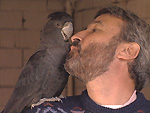
We strongly disapprove of National Parks and Wildlife Service policies which restrict the ownership of native animals. Some native animals, such as dingoes and quolls, do not make suitable pets. However, many other native animals do make good pets and they do far less damage to the environment than introduced species like cats. Don keeps budgerigars (which are Australian natives), finches and red-tailed black cockatoos, and finds them extremely rewarding pets.
Frogs
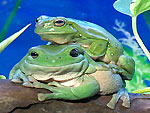
To make your backyard more frog-friendly:
Include water in your garden in the form of a pond.
Reduce your use of all types of pesticides and herbicides. If these products must be used, look for ones which will cause least damage (for example water-safe formulations of glyphosate such as Roundup) and follow safety recommendations.
Take part in community projects to rehabilitate waterways.
Recycling
Green waste: you must recycle all of your green waste – never let anything green leave your place! Don feeds it to the chooks or puts it into the compost bins. When green waste is mixed with garbage and buried in landfill it leads to toxic runoff, which is very destructive for the environment.
Aluminium: aluminium recycling is well worth doing. The process of recycling aluminium cans uses 95% less energy compared with mining and manufacturing from virgin materials.
Paper: until recently recycling paper, particularly newspaper, was a waste of time. Most of it ended up as landfill and a lot of fuel was used to collect it. As recycling collection services have become more efficient and industry learns how to deal with the material, it begins to make both environmental and economic sense to recycle all types of paper.
Glass: in most parts of Australia it’s cheaper to recycle glass into new bottles than to reuse them, but it is worse for the environment. This is due to the energy that has to be used to melt and make new bottles, compared with washing. Glass recycling is of some benefit, so you could recycle glass if you live in an urban area which has a recycling collection or where there are bottle banks. However, if you need to use fuel to travel to recycle glass, it will not benefit the environment, so throw it out in the garbage.
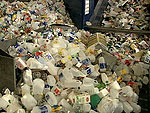
Plastic: there is no environmental reason to recycle plastics. The fuel and energy used collecting and transporting plastics for recycling may actually be detrimental to the environment.
Landcare
We believe Landcare is the best environmental group in Australia, if not the world. It is a community-based movement that cares for the land and promotes sustainable development. If you have the opportunity to be involved in a local Landcare group, do it. If you can’t, send them some money. (Phone 1800 151 105 for details of your nearest branch.)
Further reading
The Burke’s Backyard Environmental Guide is attached to the October edition of the Burke’s Backyard magazine, on sale at newsagents for $4.60. If the magazine is sold out in your area, you can obtain a copy of the Environmental Guide by sending a cheque for $3.85 to ACP Direct, Burke’s Backyard Reply Paid 3508, Sydney, NSW, 2001 or phone 13 61 16.