
The Great Wall
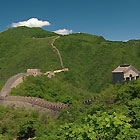
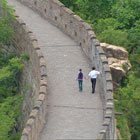
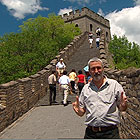
Don visited the Great Wall of China at Mutianyu, 90 kilometres north of Beijing. World Heritage listed by UNESCO in 1987, the Great Wall is probably the most widely recognised and enduring symbol of China. In fact, it is said, “The man who doesn’t visit the Wall has never been to China.”
Origins
The Great Wall has its origins in the Warring States Period (453-221BC), when rival kingdoms began building defensive walls to thwart each other’s armies. It did not become the ‘Great’ wall until the Qin Dynasty (221-207 BC), when Emperor Qin Shihuang successfully joined the walls joined together after the unification of China. At this time it stretched from east to west for around 5,000 kilometres and served to keep nomadic tribes out.
The Wall was further extended and strengthened in succeeding dynasties, particularly during the Ming Dynasty when the northern nomadic groups became very powerful. The Ming rulers had the Wall renovated 18 times. They not only restored the remains from the Qin dynasty, but constructed a further 1000 kilometres bringing the Wall to its full length of around 6,700 kilometres.
The strength of a wall depends on the courage of those who defend it, according to Genghis Khan, who broke through the Great Wall of China in 1213. The Mongols breached a 27 kilometre long section of the wall in a deep gorge in northern China, then went on to extend their empire from Vietnam all the way through to Hungary.
Monumental feat
Also known to the Chinese as the 10,000 Li Wall (One Li is roughly 500m), the Great Wall of China is the longest structure ever built, and it was built entirely by hand. It winds up and down mountains, across plateaus, deserts and grasslands, running approximately 6,700 kilometres (4,163 miles) from Shanhaiguan on the East Coast to Jiayuguan in the Gobi Desert. This is roughly the distance from Sydney to Perth and then back to Adelaide.
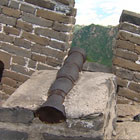
The construction varied in each dynasty, depending upon the terrain, social conditions and the engineering technology at the time. However, each designer tried to make maximum use of the natural terrain as they built the wall using as many indigenous materials as possible. The Ming Dynasty saw the creation of a sophisticated defense system along the wall embracing garrison towns, garrison posts, passes, blockhouses, watchtowers and beacon towers.
Millions of workers
When the Great Wall was first united over a period of 10 years during the Qin Dynasty, 300,000 troops were used. The builders also included conscripted labourers and convicts in exile. Later, under the Northern Qi Dynasty, 1.8 million people were forced to join the ranks of the labourers. Owing to the arduous work and poor conditions both for living and construction, many workers died and some of their remains were buried in the wall.
The Great Wall has long been incorporated into Chinese mythology and popular symbolism. The most beautiful of several legends is about the collapse of a section of the wall caused by Meng Jiangnu, who cried bitterly over the death of her husband in the construction of the Great Wall.
Outdoor museum
William Lindesay, who in 1987 trekked for 2,470km across northern China following the route of the Ming Dynasty ramparts, said that the Great Wall is the world’s most extensive outdoor museum without a curator, neither protected by any specific laws nor managed as a relic or a resource by any special office. That is the truth of the wall today. Maintaining and protecting the wall is a vast undertaking, but there is no authority to do that job and so it is very much at risk. However, the Great Wall of China remains one of the greatest of all monuments to human endeavour.
Further information
Mutianyu
Tel: +86 10 6162 6873
Admission: Y21
Cable car: Y50 round trip
Open: 6.30am – 5.30pm daily